Phone:
+86 18631189888

Email:
liyanhui@bestcastings.cn


In the rapidly evolving world of manufacturing and electronics, stamping parts copper has quietly become one of those foundational technologies that keeps things running smoothly. But why does it matter so much? Well, copper stamping is not only a cost-effective way to mass-produce precision components; it’s also critical in industries ranging from automotive to telecommunications, affecting everything from the quality of electric contacts to the efficiency of power distribution systems.
Globally, copper demand is surging—driven especially by the push towards electrification and green energy. According to the World Bank, copper prices have seen notable volatility in recent years, reflecting its growing strategic value. Understanding stamping parts copper is key because these components are foundational to creating reliable, durable products that meet modern performance requirements.
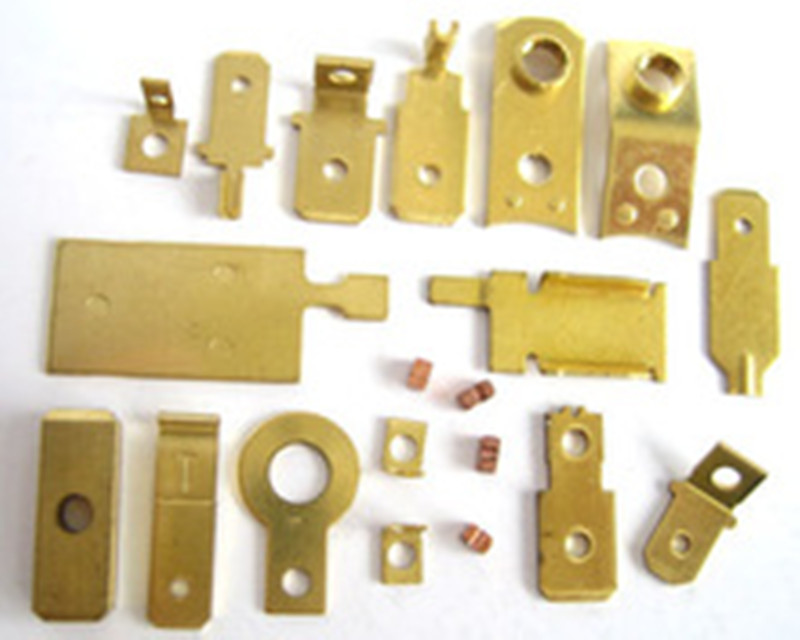
Simply put, stamping parts copper refers to copper components manufactured through a stamping process—a method where metal sheets are pressed with dies to create specific shapes. You get high volumes of uniform parts quickly, which is crucial for industrial efficiency. These parts find themselves in connectors, terminals, shielding components, and countless other electrical and mechanical assemblies.
The significance isn’t just about manufacturing speed. Copper’s exceptional electrical conductivity, thermal performance, and corrosion resistance mean stamped parts often become the irreplaceable veins and arteries in devices and infrastructures worldwide. Oddly enough, many humanitarian efforts, like disaster relief communication equipment, lean on reliable copper stamping parts to maintain mission-critical functions.
Stamped copper parts typically endure harsh environments—heat, mechanical stress, even exposure to chemicals. The stamping process also allows for specific treatments (like annealing) that enhance copper’s natural toughness.
Because stamping is a high-speed, repeatable process, costs per unit drop significantly when producing thousands or millions of parts. That makes copper stamping a go-to for industries where margins matter.
Modern stamping presses paired with computer-controlled tooling achieve remarkable tolerances. This precision ensures consistent electrical performance in sensitive applications like circuit boards or connectors.
From small batches to mass production, copper stamping adjusts flexibly. Manufacturers can ramp up quickly without sacrificing quality.
Copper is highly recyclable, and many stamped parts incorporate recycled copper, aligning with greener manufacturing goals.
Stamping parts copper balances strength, affordability, and precision, making it ideal for modern demands.
This isn’t just a niche industrial process—its footprints are everywhere. In Asia, especially China and South Korea, massive electronics manufacturing plants rely heavily on copper stamped components. Europe’s automotive sector is another big user, incorporating these parts in electric vehicles to improve power efficiency.
Even in remote industrial zones of Africa or South America, copper stamped parts are essential in renewable energy setups—solar panels, wind turbines—where efficiency and durability can’t be compromised. A fascinating example is post-disaster telecommunications, where NGOs equip emergency kits with copper-stamped connectors, ensuring resilient communication even when infrastructure crumbles.
| Parameter | Typical Range | Notes |
|---|---|---|
| Material Grade | C11000 (Electrolytic tough pitch copper) | High conductivity, common choice |
| Thickness | 0.1 mm - 5 mm | Varies by application |
| Tolerance | ±0.01 mm | Critical for electrical connections |
| Surface Finish | Tin-plated, Nickel-plated, Bare copper | Depends on corrosion resistance needs |
| Production Volume | 1,000 - millions per batch | Highly scalable |
| Supplier | Production Capacity | Material Options | Global Reach | Custom Solutions |
|---|---|---|---|---|
| Mingda Metals | Up to 10 million parts/month | C11000, C101, Phosphor bronze | Asia, Americas, Europe | Yes, with engineering support |
| CopperStamp Inc. | 5 million parts/month | C11000, Brass | North America, Europe | Limited |
| Global Metalworks | 8 million parts/month | C101, Copper alloys | Global | Yes, design consultation |
When you think about it, stamping parts copper blends the practical with the aspirational. Practically, you get components that help power up cars, keep your internet running, and enable cleaner energy systems. They’re affordable to produce, which passes cost savings down the supply chain. Long-term, their recyclability and efficiency contribute to more sustainable manufacturing paradigms.
On another note, the trustworthiness of these parts means safety isn’t compromised. In sectors like medical devices or aerospace, a tiny copper stamped part might literally be a lifesaver. So, for engineers and buyers alike, investing time to understand this technology isn’t just about dollars—it’s about peace of mind and pushing innovation forward.
Automation and Industry 4.0 are transforming stamping tremendously. Computer-controlled presses now integrate real-time quality control to minimize defects. Meanwhile, greener policies push suppliers to source recycled copper—and develop low-impact plating techniques.
We’re also seeing research into novel copper alloys that hold better strength without sacrificing conductivity, responding to demands for thinner, lighter electronics. Plus, additive manufacturing (3D printing) might someday complement stamping for ultra-complex geometries, although for now, stamping remains king for volume and cost.
Of course, challenges remain: copper’s softness can cause tooling wear, leading to maintenance costs. Also, dimensional control becomes tougher at ultra-thin gauges. To overcome these, engineers innovate with tool coatings and stepped annealing protocols, extending tool life and improving part consistency.
Another obstacle is supply chain volatility—copper prices fluctuate with global markets. Forward-thinking firms hedge supplies and establish diversified sourcing, ensuring uninterrupted production.
All in all, stamping parts copper is more than metal shapes—it’s a vital piece in the puzzle of modern industry and sustainable development. From powering clean energy to enabling reliable electronics, these parts quietly do a lot of heavy lifting. For anyone involved in electrical or manufacturing fields, getting a solid grasp of copper stamping technologies and suppliers is a smart move.
If you want to explore high-quality, customizable copper stamping solutions, visit our trusted partner: https://www.mingdametals.com.
Here’s hoping this glimpse into stamping parts copper sheds light on its quiet but powerful impact on our connected world.
Quick final thought: Sometimes the smallest parts hold the biggest influence—copper stamping proves that every day.