Phone:
+86 18631189888

Email:
liyanhui@bestcastings.cn


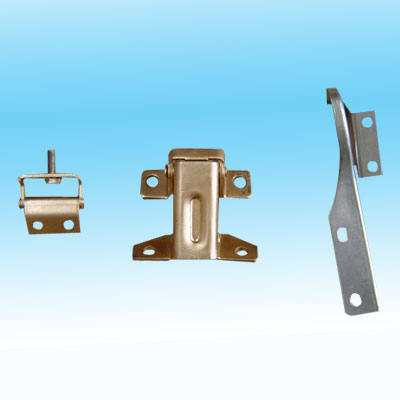
Stainless steel stamping parts are widely used in industrial equipment, automotive components, electrical systems, machinery, and other applications that require durable metal components with consistent dimensions and corrosion resistance. Through processes such as punching, blanking, bending, and forming, stainless steel sheet can be converted into components with precise shapes and repeatable characteristics. For manufacturers and OEM buyers, selecting suitable materials, tooling, production methods, and inspection procedures is essential for achieving reliable stainless steel stamping parts. Hebei Mingda International Trading Company works with qualified manufacturing facilities in China to provide customized metal components according to customer drawings, specifications, production volumes, and quality requirements.

The production of stainless steel stamping parts begins with selecting the appropriate stainless steel grade and sheet thickness according to the application. Different grades provide different combinations of corrosion resistance, strength, hardness, and forming characteristics. Material selection therefore needs to be considered together with the component's geometry and working environment.
Stamping allows manufacturers to produce repeated components with consistent dimensions once the appropriate tooling and process parameters have been established. This makes stainless steel particularly suitable for projects requiring large quantities of identical components. Depending on the design, the manufacturing process may include blanking, punching, bending, deep drawing, or multiple forming operations.
Dimensional consistency is especially important when stamped components are incorporated into larger assemblies. Hole positions, bending angles, formed sections, and overall dimensions need to remain within the specified tolerances so that components can be assembled correctly without extensive secondary adjustment.
Material selection has a direct influence on the performance and manufacturability of stainless steel stamping parts. Stainless steel is often selected when components need resistance to moisture, oxidation, chemicals, or other demanding environmental conditions. The appropriate grade depends on the intended application rather than simply the appearance of the finished component.
Sheet thickness is another important consideration. Thinner materials may be suitable for lightweight covers, brackets, clips, and electrical components, while thicker sheet may be required for structural or load-bearing applications. The material must also be compatible with the planned forming operations to reduce the risk of cracking, deformation, or dimensional instability.
For OEM projects, buyers should provide information about material grade, thickness, tolerances, surface requirements, and operating conditions. With these details, the manufacturer can evaluate the feasibility of the stamping process and determine whether additional operations are required.
Precision metal stamping parts require close control over tooling, material thickness, forming pressure, and production parameters. Although stamping is generally associated with high-volume production, precision stamping can also be applied to components with detailed geometries and demanding dimensional requirements.
Tool design plays an important role in maintaining repeatability. A properly designed die can control the position and shape of features during production, while regular tooling inspection helps reduce dimensional variation over longer production runs. For components with multiple holes, bends, or formed sections, process sequencing should be considered carefully to maintain accuracy.
Inspection procedures should be based on the functional requirements of the component. Critical dimensions such as hole diameter, hole location, overall dimensions, bending angles, and formed heights can be checked against approved drawings or samples. Surface quality should also be reviewed when the component will remain visible or receive additional finishing.
Many industrial applications require custom metal stamping parts rather than standardized components. Custom production allows manufacturers to develop parts according to customer drawings, samples, dimensions, and application requirements. The design may include specific hole patterns, mounting points, bends, curves, or other formed features required for a particular assembly.
Customization can also extend to surface finishing and secondary operations. Depending on the project, stamped components may require deburring, polishing, grinding, welding, machining, or other post-processing. These operations should be considered during the initial design and production evaluation to ensure that the completed component meets the required specifications.
For OEM buyers, providing complete technical documentation can make the development process more efficient. Drawings should clearly identify material, thickness, dimensions, tolerances, surface treatment, and any critical functional areas. When samples are required, they can provide an additional reference for appearance and dimensional verification before mass production.
The versatility of stainless steel stamping parts makes them suitable for a broad range of industries. In automotive applications, stamped stainless steel components can be used for brackets, supports, shields, clips, and other structural or mounting elements. Their corrosion resistance can be useful in environments exposed to moisture and temperature changes.
In electrical and electronic equipment, stainless steel stamped components may be used for housings, mounting parts, shielding components, terminals, and structural elements. Machinery manufacturers may also use stamped parts as brackets, covers, supports, connection components, and accessories.
The use of stamping alongside machining, casting, and forging can provide additional flexibility for complex assemblies. A single industrial project may require different manufacturing methods depending on the geometry and functional requirements of each component. Coordinating these processes through an experienced sourcing partner can simplify procurement for international OEM buyers.
Quality control is an important part of producing stainless steel stamping parts, particularly when components are manufactured in large quantities. Raw material should be checked against the specified grade and thickness before production begins. During stamping, tooling condition and process parameters should be monitored to maintain consistent dimensions and surface quality.
Finished components can be inspected according to customer drawings and agreed quality standards. Dimensional inspection helps identify variations in critical areas, while visual inspection can detect scratches, deformation, burrs, cracks, or other surface defects. For projects involving secondary machining or finishing, those operations should also be included in the final inspection process.
Consistent quality is particularly important for repeat OEM orders. Once the tooling, material, and production parameters have been approved, maintaining the same manufacturing conditions can help reduce variation between different batches.
When sourcing metal stamping parts, international buyers often need to consider production capability, material availability, tooling experience, inspection capacity, and delivery arrangements together. A suitable China metal stamping parts manufacturer can provide access to established metal-processing resources and production capabilities, but supplier evaluation should focus on whether the manufacturer can meet the specific requirements of the project.
Hebei Mingda International Trading Company has extensive experience coordinating industrial components through manufacturing facilities in China. Its product range covers ductile iron, grey iron, brass, stainless steel and aluminum castings, machined castings, forged parts, and CNC-machined components. This experience allows Mingda to support projects where stamped components need to be combined with other types of mechanical parts.
Mingda works according to customer drawings and specifications and can coordinate suitable production resources based on material, component design, quantity, quality requirements, and delivery expectations. Its manufacturing network includes capabilities such as CNC machining, grinding, deburring, casting, forging, and secondary processing, providing flexibility for OEM projects involving different component types.
For buyers developing custom metal stamping parts, a reliable production process should begin with a clear understanding of the drawing and application requirements. Material grade, sheet thickness, tolerances, tooling, surface condition, production quantity, and secondary operations all influence the final result.
Hebei Mingda International Trading Company can help international customers coordinate customized industrial components according to drawings and technical specifications. With manufacturing resources covering casting, forging, CNC machining, and other mechanical processes, Mingda can support projects that require more than one type of component. Contact Mingda to discuss your stainless steel stamping parts requirements, submit your drawings, and request a customized quotation for your next OEM project.