
Selecting the right manufacturing partner is often the most critical decision in a product's development lifecycle, especially when precision and material integrity are non-negotiable. For engineers and procurement officers, the search for reliable aluminium die casting companies involves balancing technical capability with scalable production capacity.
Aluminium die casting offers a unique combination of lightweight properties and high structural strength, making it indispensable for automotive, aerospace, and industrial machinery sectors. However, the variance in quality between different foundries can lead to significant risks, ranging from porosity issues to dimensional inaccuracies.
This guide examines the technical benchmarks, procurement criteria, and strategic considerations necessary to evaluate high-performance casting partners and ensure that the final machined parts meet rigorous industrial standards.

Evaluating the Technical Capabilities of Casting Partners

When auditing aluminium die casting companies, the primary focus must shift from price-per-unit to the total technical ecosystem. A capable partner does not simply pour metal; they manage a complex chain of thermal dynamics, mold engineering, and post-casting refinement.
The ability to integrate Aluminium Machining Parts within the same workflow is a significant advantage. By combining casting with precision CNC machining, companies can reduce lead times and minimize the risk of damage during transit between different vendors. This vertical integration ensures that tight tolerances are maintained across complex geometries.
Furthermore, a professional foundry must demonstrate proficiency in various molding techniques. Whether utilizing resin sand, lost-wax, or high-pressure die casting, the choice of craft must align with the specific volume and complexity of the part to avoid unnecessary costs or structural failures.
Core Advantages of High-Pressure Die Casting Processes
The primary appeal of die casting lies in its ability to produce complex, thin-walled components with exceptional repeatability. By forcing molten aluminium into a steel mold under high pressure, manufacturers can achieve surface finishes that require minimal secondary processing.
Beyond speed, the strength-to-weight ratio of aluminium makes it a superior choice over iron or steel for mobile applications. The process allows for the creation of intricate internal structures that would be impossible or prohibitively expensive to machine from solid billets.
Moreover, the consistency of the material grade—such as utilizing specialized alloys—ensures that the parts can withstand specific environmental stresses, including corrosion and thermal cycling, which are critical for outdoor industrial equipment.
Industrial Applications and Material Integration Scenarios
Aluminium components are rarely used in isolation. In complex assemblies, they often interface with other metals. For instance, a system might combine Aluminium Casting with Stainless Steel Forging or Brass Machining Parts to balance cost, weight, and corrosion resistance.
In the automotive sector, engine blocks and transmission housings rely on die casting for thermal efficiency and lightness. In contrast, the construction and utility sectors often utilize heavier materials like Cast Iron for manhole covers and pipe fittings, where compressive strength and stability are the primary requirements over weight reduction.
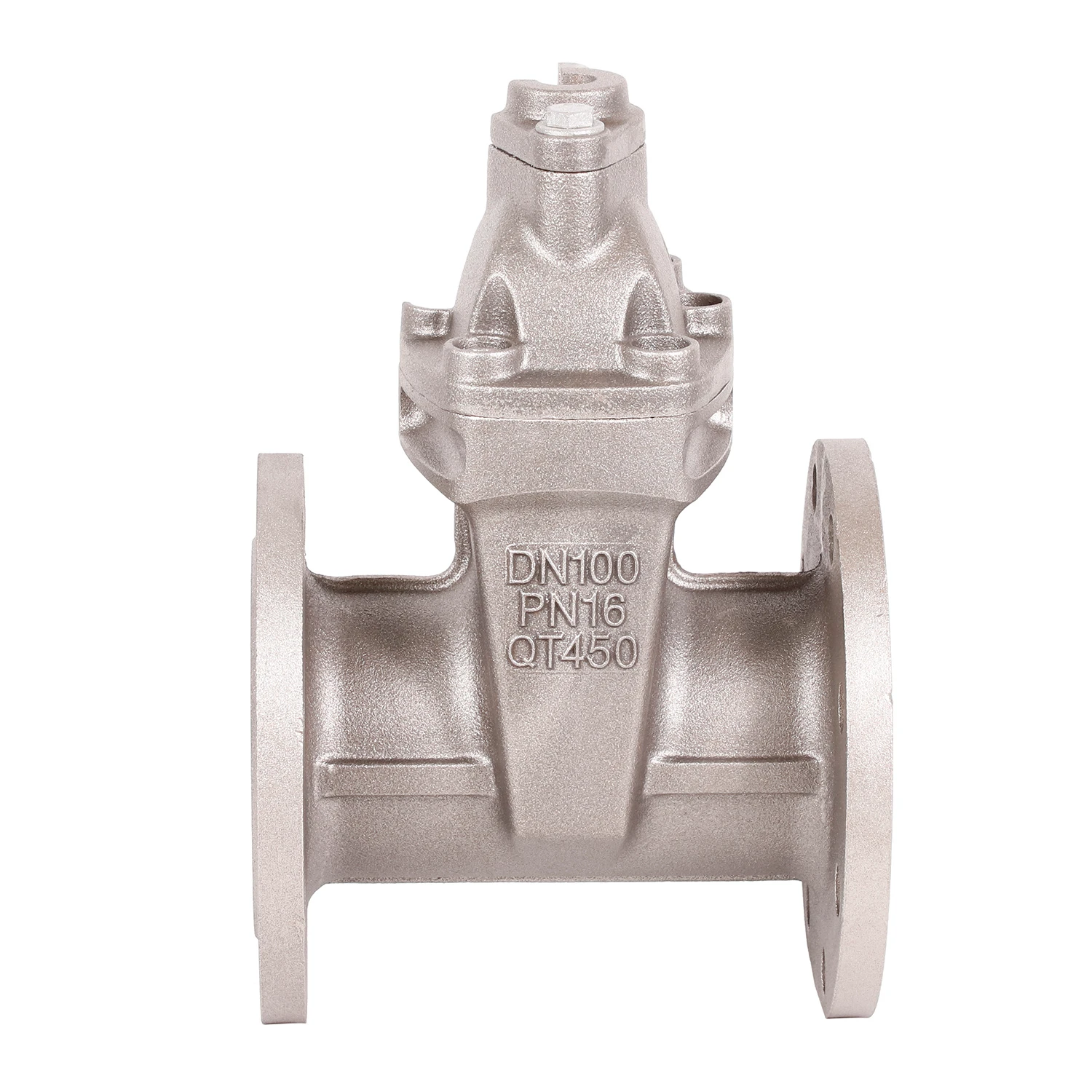
The flexibility to offer OEM services allows companies to customize these material combinations. For example, a valve body may require the corrosion resistance of bronze but the structural housing of aluminium, necessitating a partner who understands the interplay between different metallurgical properties.
Benchmarking Quality Metrics in Aluminium Production
Quantifying the performance of a casting partner requires looking at key performance indicators (KPIs) such as scrap rates, dimensional stability, and surface roughness. These metrics directly impact the final assembly cost and the longevity of the end product.
When comparing standard industry benchmarks against optimized production lines, the difference is often seen in the "First Pass Yield" (FPY). High-tier companies utilize advanced quality assurance systems to identify deviations in real-time, significantly reducing the amount of wasted material.
aluminium die casting companies Performance Metrics
The data suggests that integrated machining and casting workflows not only improve dimensional accuracy but also reduce the total lead time for complex parts, providing a competitive edge in fast-moving markets.
Strategic Procurement and Supplier Risk Mitigation
Procurement of cast parts is fraught with hidden risks, particularly when outsourcing to regions with varying regulatory standards. The key to mitigation is a rigorous supplier audit that focuses on quality control systems rather than just certificates on a wall.
Buyers should evaluate the partner's ability to handle "extraordinary" lead times. For example, a company capable of reducing a standard 30-day lead time to 20 days in emergencies can save a client thousands in air freight costs and prevent production line shutdowns.
Transparency in the production process—from wax injection and shell making to final coating—is essential. Partners who provide detailed inspection reports and allow for third-party verification (such as SGS or BV) are generally more reliable and easier to manage long-term.
Future Trends in Lightweight Metal Fabrication
The industry is moving toward "Smart Casting," where AI-driven simulations predict mold shrinkage and porosity before a single drop of metal is poured. This shift reduces the prototyping phase and accelerates the time-to-market for new industrial designs.
There is also a growing emphasis on sustainable materials. The recycling of aluminium scrap into high-grade casting alloys is likely to become a standard requirement for global brands looking to reduce their carbon footprint without sacrificing part performance.
Furthermore, the integration of additive manufacturing (3D printing) for rapid tooling may allow companies to produce small batches of complex aluminium parts more efficiently, bridging the gap between prototyping and mass production.
Comparative Analysis for Partner Selection
Selecting the right vendor requires a multi-dimensional comparison. While some companies excel in high-volume standard parts, others are better suited for high-complexity, low-volume custom industrial components.
The following table outlines the critical decision factors when choosing between different types of casting and machining solutions based on project requirements.
| Solution Type | Primary Use Case | Technical Advantage | Cost Driver |
|---|---|---|---|
| High-Pressure Die Casting | Mass production automotive | High repeatability | Initial mold cost |
| Investment Casting | Aerospace precision parts | Complex geometries | Labor-intensive process |
| Sand Casting | Heavy industrial housings | Large part capability | Surface finish refining |
| CNC Machined Castings | Hydraulic valve bodies | Tight tolerances | Secondary operation time |
| Gravity Die Casting | Engine components | Better mechanical properties | Slower cycle times |
| Custom OEM Alloy | Specialized corrosive environments | Tailored material specs | Material sourcing cost |
Ultimately, the best partner is one whose production craft—whether it be lost-foam, resin sand, or die casting—aligns precisely with the technical drawings and quality standards of the project.
Frequently Asked Questions
Conclusion
Navigating the landscape of aluminium die casting companies requires a strategic approach that prioritizes technical synergy over lowest-bid pricing. The ability to seamlessly transition from raw casting to precision machining is the hallmark of a high-tier partner, ensuring that structural integrity is matched by dimensional precision.
For organizations seeking to optimize their supply chain for metal components, reviewing the comprehensive production solutions and material capabilities available through www.mingdametals.com can provide the necessary technical context for informed decision-making.