Phone:
+86 18631189888

Email:
liyanhui@bestcastings.cn


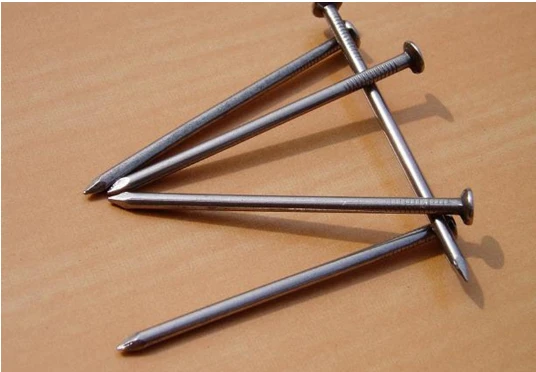
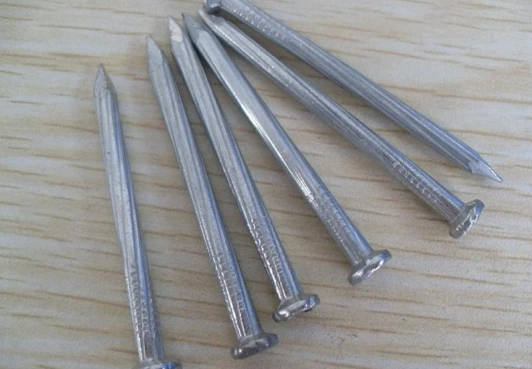
If you search for Ring Shank Coil Roofing Nails,Protruding Roofing Nails,Bright Common Nails you'll find a confusing mix of terms, grades, and finishes — and yes, a surprising number of manufacturers claiming "premium" performance. I'm an industry reporter who's been in workshops and factory floors enough to smell the oil and see what actually holds a roof down in a gale.
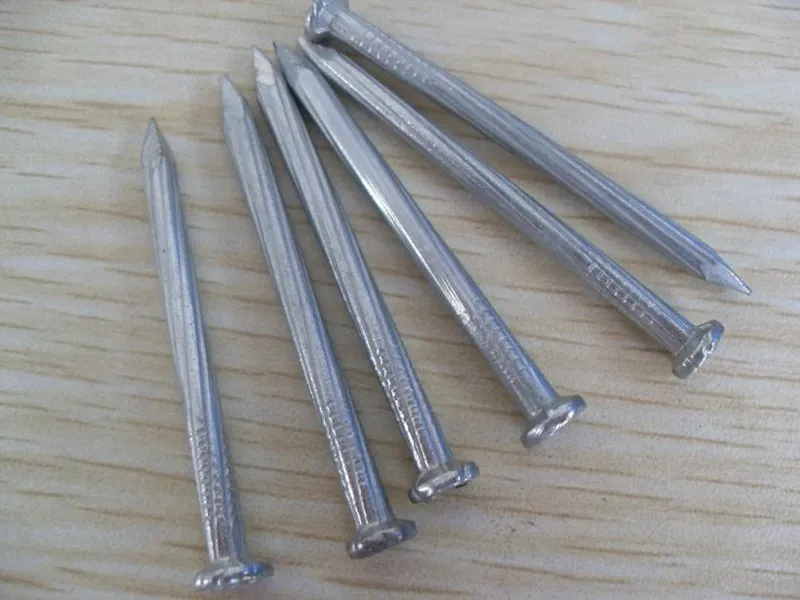
To be honest, corrosion resistance is king right now. Coastal construction and extended warranties have pushed buyers toward galvanized and ring-shank fasteners. Coil nails (ring shank) for pneumatic tools are growing ≈15% year-on-year in many regions. Also, sustainability talk means buyers ask about recyclability and supply-chain traceability — not just price.
Manufacturers list many variants, but the main types are:
|
Attribute |
Typical Value |
|
Material |
High-strength steel, galvanized option |
|
Shank Type |
Ring, smooth, or protruding |
|
Lengths |
≈ 3/4" to 3" (varies by use) |
|
Standards |
GB, DIN, ANSI, ASTM references |
|
Tensile Grade |
≈ 6.8 (real-world use may vary) |
Briefly: raw high-strength steel wire → straightening & cutting → head forming → shank forming (ring or smooth) → heat treatment (where specified) → surface finish (hot-dip galvanize, electro-galv, bright) → packaging. Tests include pull-out/pull-over, tensile strength, salt spray (ASTM B117), and dimensional inspections per GB/DIN/ANSI. Service life? In a dry, interior environment bright nails last decades; exterior galvanized nails ≈ 15–30 years depending on exposure.
|
Vendor |
Certifications |
Capacity |
Lead time |
Notes |
|
Mingda (example product: Smooth Shank Galvanized Steel Concrete Nail) |
GB, DIN, ANSI, (ISO 9001 likely) |
≈ 100 Ton/month |
≈ 2–6 weeks |
Export packaging, ocean/air/land |
|
Vendor B |
ISO9001, CE |
≈ 50 Ton/month |
≈ 3–8 weeks |
Competitive price, limited finishes |
|
Vendor C |
ASTM/ANSI compliance |
≈ 200 Ton/month |
≈ 1–4 weeks |
Fast delivery, premium finishes |
Many contractors say ring-shank coils save labor time and reduce rework; one roofer told me, "it just holds like glue." Surprisingly, some buyers still prefer bright commons for indoor framing — cheaper and perfectly adequate. But beware: wrong finish on coastal jobs = callbacks.
If you want the nitty-gritty on the Mingda Smooth Shank product or need certificate copies, their product page is a useful starting point; for specs see the tables above and ask vendors for test reports (salt spray, pull-out).
Authoritative sources & further reading: