Phone:
+86 18631189888

Email:
liyanhui@bestcastings.cn


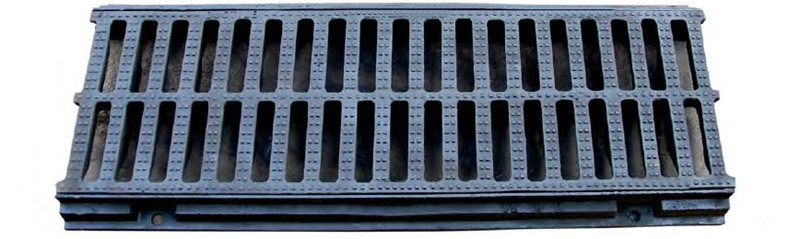
Working in industrial equipment and infrastructure for over a decade gives you a certain appreciation for how critical good drainage solutions are. Polymer concrete drainage channels have, frankly, been gaining traction in recent years—not just a passing trend but a genuine upgrade over traditional materials. When I first encountered them on-site, I was skeptical: polymer concrete sounded almost too good to be true. But after seeing the performance in real terms, I’m convinced these suppliers truly have something valuable to offer.
The industry has been slowly pivoting from old concrete and metal channels to polymer concrete due to its outstanding durability and resistance to chemical corrosion. When you consider environments like wastewater treatment plants or chemical factories, the channels must withstand not only heavy mechanical loads but also harsh chemical exposure. Ordinary concrete just can’t keep up.
One detail that’s easy to overlook is how suppliers differ in their formulations of polymer concrete. Some use a higher resin-to-aggregate ratio, which affects everything from curing time to final strength. I remember visiting a manufacturing plant where they carefully tested their mixtures under accelerated aging protocols—essentially simulating years of harsh weather and chemical exposure in just weeks. Not every supplier invests in that kind of quality control, which is why it pays to choose carefully.
Here's a quick look at typical product specs you might encounter when comparing polymer concrete drainage channels:
| Specification | Typical Value | Remarks |
|---|---|---|
| Compressive Strength | > 80 MPa | Exceeds standard concrete |
| Flexural Strength | > 15 MPa | Critical for load-bearing channels |
| Chemical Resistance | Excellent | Resistant to most industrial acids and alkalis |
| Water Absorption | Low porosity ensures durability | |
| Standard Length | 1 m – 3 m | Common customization available |
In my experience, the best suppliers also emphasize customization. You can’t always stick with off-the-shelf dimensions when your drainage project has unique constraints (like unusual widths or load classes). Some offer modular systems, making installation easier and reducing onsite errors. It's those little conveniences that often determine whether a project finishes on time or gets delayed, costing a bundle.
Of course, pricing varies quite a bit between suppliers. Without naming names here (except linking you to a trusted one), I’ve learned that the cheapest option often lacks in quality assurance or after-sales support. And oddly enough, some mid-tier providers strike a nice balance, offering both solid durability and decent lead times.
| Supplier | Quality | Customization | Lead Time | Price Level |
|---|---|---|---|---|
| Mingda Metals | Excellent | High | 2-3 weeks | Moderate |
| Supplier A | Good | Medium | 3-4 weeks | Low |
| Supplier B | Fair | Low | 1-2 weeks | High |
I recall a colleague sharing a story: their project was delayed because the drainage channels warped in a chemically aggressive environment. Switching mid-project to a polymer concrete solution from a reputable supplier like Mingda Metals solved that problem once and for all. It’s a lesson I've seen repeatedly—cutting corners on suppliers simply shifts problems down the line.
What really earns trust is transparency about product testing and certifications. Many engineers I talk to insist on suppliers that provide full documentation of third-party tests, especially for chemical resistance and mechanical load ratings. Since polymer concrete is a bit newer in some markets, it’s crucial to verify those claims yourself.
So, if you’re hunting for polymer concrete drainage channel suppliers, I’d recommend weighing not just price but quality, customization, and proven reliability. It feels like the industry is moving toward smarter investments in infrastructure, and drainage channels are no exception. You want suppliers that keep pace with new materials science and real-world testing—it makes your projects smoother, and frankly, your reputation safer.
At the end of the day, it’s about peace of mind. Because when you’re responsible for something as essential as drainage infrastructure, there’s no room for “kind of good enough.”
References:
1. ASTM International standards on polymer concrete composites
2. "Durability of Polymer Concrete in Industrial Applications," Journal of Materials Engineering, 2022
3. Conversations with field engineers in wastewater management, 2023