Phone:
+86 18631189888

Email:
liyanhui@bestcastings.cn

Achieving tight tolerances in complex geometric shapes often presents a significant engineering bottleneck, especially when corrosion resistance is a non-negotiable requirement. For critical components in fluid control and heavy machinery, the shift toward specialized casting techniques has moved beyond mere cost-saving to a strategic necessity for operational reliability.
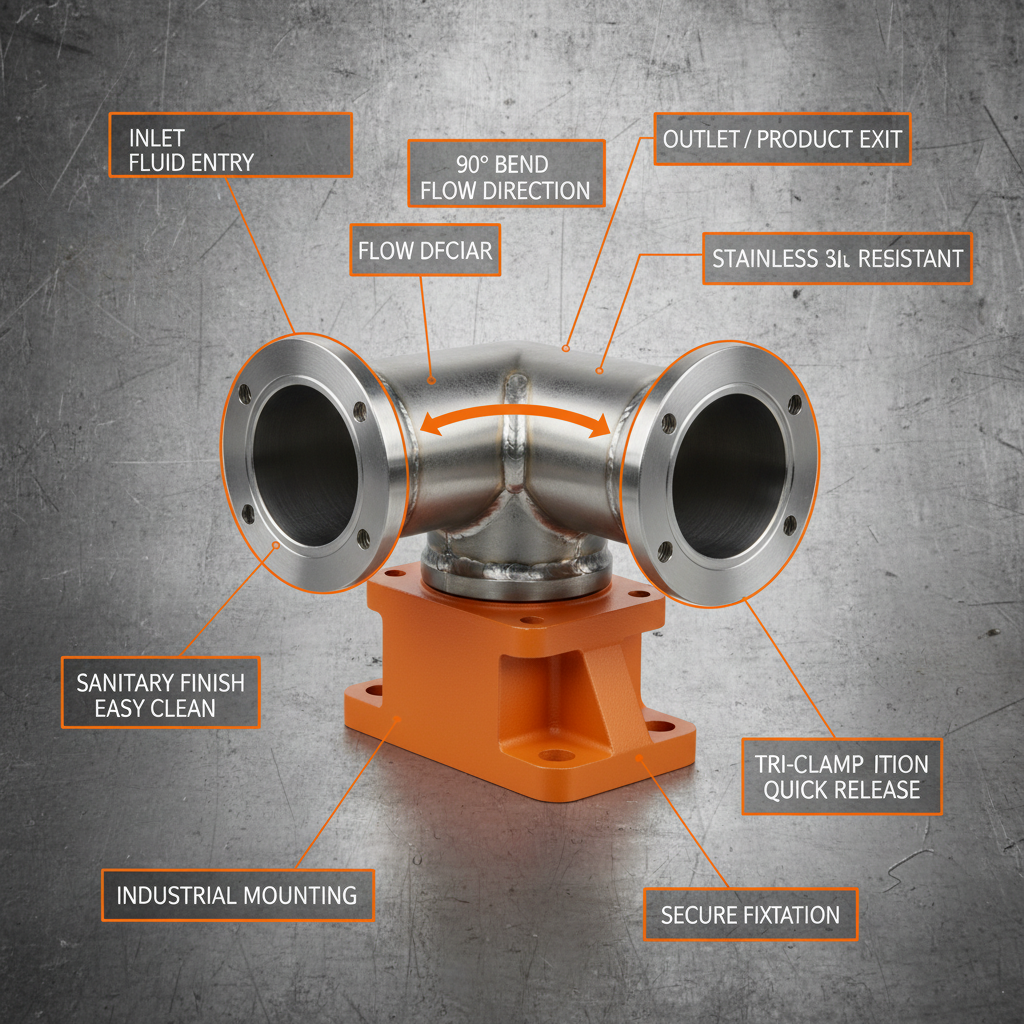
The industrial demand for high-performance alloys has led to the refinement of the "lost wax" process, allowing for the creation of parts that require minimal secondary machining. This evolution is particularly evident in the production of valve bodies and pump components where internal flow paths must be precise to prevent turbulence and energy loss.
Understanding the nuances of material selection and production craft is essential for procurement managers and engineers. By examining the technical framework of stainless steel precision casting products, we can identify how to balance mechanical properties with production efficiency.


The lost wax process, or investment casting, operates on the principle of creating a sacrificial wax pattern that is encased in a ceramic shell. Once the shell is fired, the wax melts away, leaving a precise cavity that is filled with molten stainless steel. This method allows for the production of intricate internal geometries that would be impossible or prohibitively expensive to machine from solid billets.
For components ranging from 0.2kg to 200kg, this technique ensures that the structural integrity of the alloy is maintained while achieving near-net shapes. The ability to control the cooling rate and shell composition directly impacts the final grain structure of the stainless steel, which is critical for parts used in railway and automotive transmission systems.
Selecting the correct stainless steel grade is a fundamental decision that affects the long-term durability of the component. SS304 is widely utilized for its excellent balance of formability and corrosion resistance, making it suitable for general industrial equipment and food-processing machinery where exposure to aggressive chemicals is limited.
In contrast, SS316 contains molybdenum, which significantly enhances its resistance to chlorides and sulfuric acids. This makes it the standard choice for marine environments and chemical processing plants. When precision casting these materials, the fluid dynamics of the molten metal differ slightly, requiring adjustments in the pouring temperature to avoid porosity and shrinkage defects.
Beyond these common grades, specialized alloys like 1.4310 are employed for components requiring higher strength and spring-like properties. The choice of material must be aligned with the actual environmental stress the part will encounter, ensuring that the precision casting process does not compromise the material's inherent chemical stability.
While the goal of precision casting is to achieve a near-net shape, the reality of metallurgical shrinkage usually necessitates secondary operations. The degree of machining required depends on the critical nature of the part's interface surfaces, such as flange faces or bearing seats.
The optimal production strategy involves a hybrid approach: using lost wax casting to establish the complex bulk geometry and CNC precision machining to refine tight-tolerance surfaces, thereby minimizing material waste and reducing total lead time.
Modern facilities now integrate CNC turning, milling, and surface grinding as a direct extension of the casting line. By producing parts from 1mm to 300mm with synchronized tolerances, manufacturers can offer a complete assembly solution, reducing the risk of misalignment that often occurs when casting and machining are handled by different vendors.
Measuring the success of a precision casting run involves analyzing several qualitative and quantitative indices. Dimensional accuracy, surface roughness, and internal porosity are the primary metrics. A high-quality casting should exhibit a consistent surface finish that reduces the need for extensive polishing, particularly for components used in high-pressure pumps.
When comparing different casting methods, the lost wax process typically scores higher in geometric complexity and surface finish compared to sand casting, though it may have a different cost-to-volume ratio. The following index illustrates the relative suitability of various factors in the precision casting workflow.
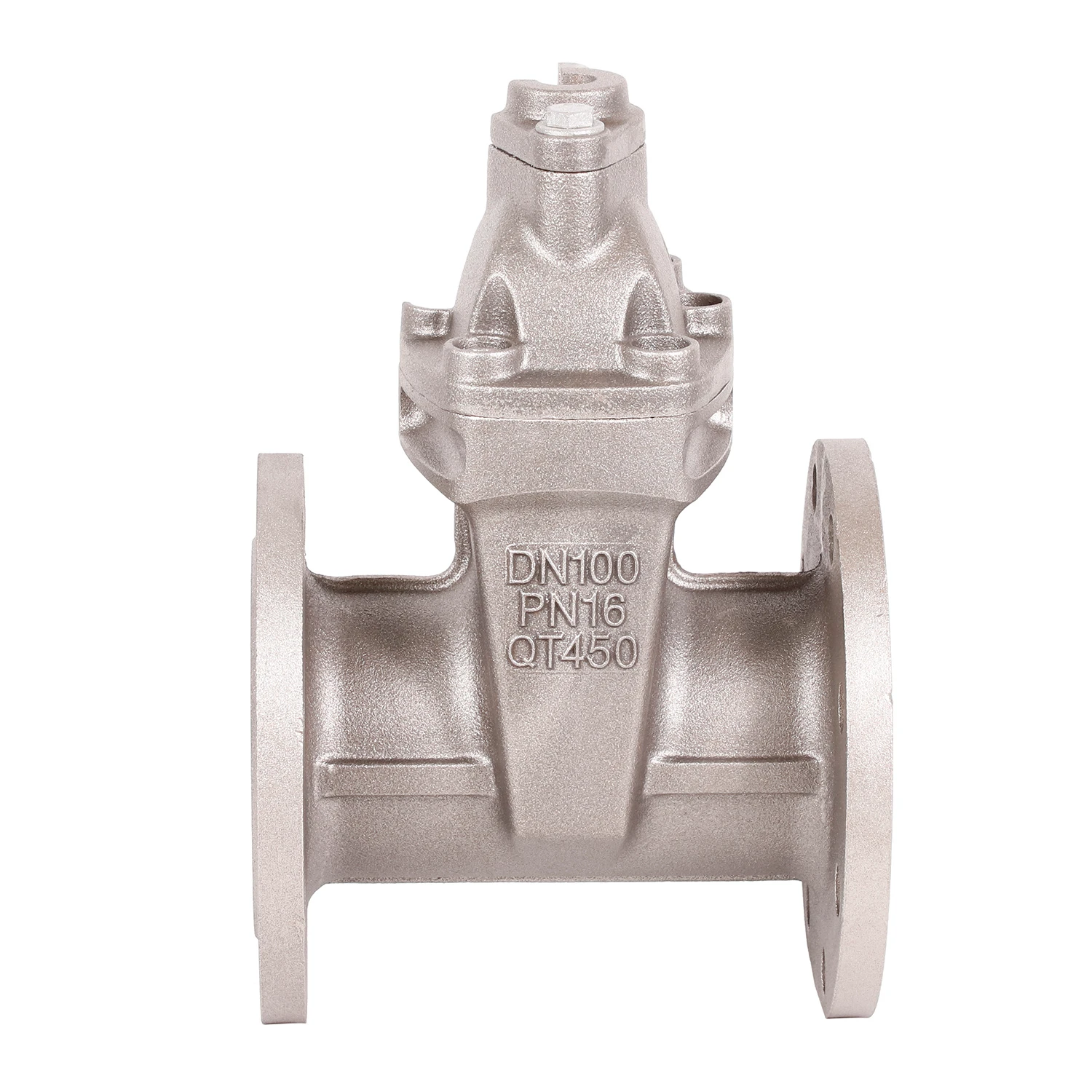
In the valve and hydrant industry, the internal surface integrity of the casting is paramount. Any casting defect or surface irregularity can lead to leakage or premature wear under high-pressure cycles. For these applications, the lost wax process is preferred because it allows for a seamless internal bore that can be precision-machined to a mirror finish.
Conversely, in the railway and trucking sectors, the focus shifts toward structural load-bearing capacity and fatigue resistance. Components like brackets and housing units must be free of internal voids. This requires rigorous quality control during the shell-making and pouring phases to ensure that the final stainless steel part can withstand the dynamic stresses of heavy-duty transport.
Historically, casting was seen as a "rough" process, with machining used to correct major deviations. However, the integration of advanced CNC systems and precision wax injection has shifted the benchmark. We are seeing a trend where "cast-to-size" components are becoming more common, reducing the reliance on heavy machining.
This shift is driven by the need for lighter components in the aerospace and automotive sectors. By optimizing the casting process, engineers can remove unnecessary material from the design phase rather than removing it via milling after the part is cast. This not only saves material but also preserves the metallurgical properties of the outer skin.
The challenge now lies in the consistency of mass production. Maintaining a ±0.1mm tolerance across a batch of 1,000 units requires sophisticated temperature control and a highly stable ceramic shell formula. This level of precision is what differentiates a standard foundry from a professional precision casting provider.
When sourcing stainless steel components, procurement teams often face a trade-off between initial unit cost and total cost of ownership. A cheaper casting that requires extensive secondary machining often ends up being more expensive than a high-precision casting with near-net dimensions.
Evaluation should be based on the "Total Process Cost," which includes the casting, the CNC machining hours, the surface treatment, and the quality inspection. Hebei Mingda International Trading Company applies this logic by offering a flexible production craft, selecting between resin sand, lost wax, or lost foam based on the actual tolerance request and demand quantity.
To assist in this decision, the following framework compares various production methods across critical industrial requirements.
| Evaluation Factor | Lost Wax Casting | Sand Casting | CNC from Billet | Forging + Machining |
|---|---|---|---|---|
| Geometric Complexity | Very High | Medium | Low/Medium | Medium |
| Surface Finish | Smooth | Rough | Excellent | Medium |
| Material Waste | Low | Medium | High | Medium |
| Unit Cost (High Vol) | Medium | Low | High | Medium |
| Lead Time (Small Vol) | Medium | Fast | Very Fast | Slow |
| Tolerance Capability | High | Low | Ultra-High | High |
The primary advantage is the ability to produce much more complex shapes with significantly better surface finishes and tighter dimensional tolerances. Lost wax casting eliminates the need for the parting lines found in sand casting, which reduces the amount of post-cast grinding and machining required to achieve a finished part.
The choice depends on the chemical environment. SS304 is sufficient for most indoor industrial and food-grade applications. However, if your component will be exposed to saltwater, brine, or harsh chemical solvents, SS316 is necessary due to its molybdenum content, which prevents pitting and crevice corrosion.
Rarely. While precision casting can achieve near-net shapes, critical mating surfaces (like threads or bearing seats) still require CNC machining to meet micron-level tolerances. The most efficient workflow uses casting for the bulk shape and CNC machining only for the high-precision interfaces.
Depending on the facility, precision castings can range from very small components of 0.2kg to larger industrial parts up to 200kg. TheLost wax process is particularly efficient for these mid-range weights where complexity is high but the volume is not so large as to require heavy industrial sand molds.
Standard lead times usually hover around 30 days, covering mold design, wax injection, shelling, and pouring. However, for urgent industrial replacements, optimized workflows can sometimes reduce this to 20 days, though this often depends on the complexity of the wax mold and the availability of the specific alloy grade.
Common defects include gas porosity, shrinkage cavities, and sand inclusions. These are usually caused by improper pouring temperatures, insufficient venting of the ceramic shell, or contamination of the molten metal. Strict quality control and the use of vacuum molding can significantly mitigate these risks.
The integration of advanced casting techniques with precision CNC machining has redefined the possibilities for stainless steel components. By prioritizing the synergy between material science and production craft, industries can produce parts that are not only more durable but also more cost-effective over their entire lifecycle.
As tolerance requirements continue to tighten across the global supply chain, the ability to source components that balance near-net casting with precision finishing will be a key competitive advantage for manufacturers in the valve, pump, and heavy transport sectors.