Phone:
+86 18631189888

Email:
liyanhui@bestcastings.cn


Custom metal stamping parts might sound like a niche manufacturing phrase, but in reality, they’re a cornerstone of countless industries worldwide. From automotive to aerospace, medical devices to consumer electronics, these tailor-made components provide essential functionality while boosting efficiency and cost-effectiveness across global supply chains. In an increasingly interconnected and resource-conscious world, understanding custom metal stamping parts offers valuable insights into how manufacturing adapts to meet evolving economic, environmental, and technological needs.
According to the International Organization for Standardization (ISO), the global industrial manufacturing sector accounts for nearly 20% of the world’s GDP, much of which relies heavily on precision components like stamped metal parts. These parts are fundamental to mass production — the industry’s backbone — ensuring consistent quality and performance. Surprisingly, the practice of stamping metal to shape parts dates back centuries, yet it remains vital now, as manufacturers face escalating demand for lighter, stronger, and more cost-effective components amid supply chain challenges.
One persistent challenge in manufacturing is balancing speed and customization. Custom metal stamping parts address this head-on: they’re crafted for specific purposes but produced at scale. This addresses both agility and cost-efficiency – a pretty neat solution in the era of just-in-time manufacturing. You might not realize it, but things like the tiny brackets holding your smartphone’s circuit board or the precision springs in a car’s braking system are products of this technology.
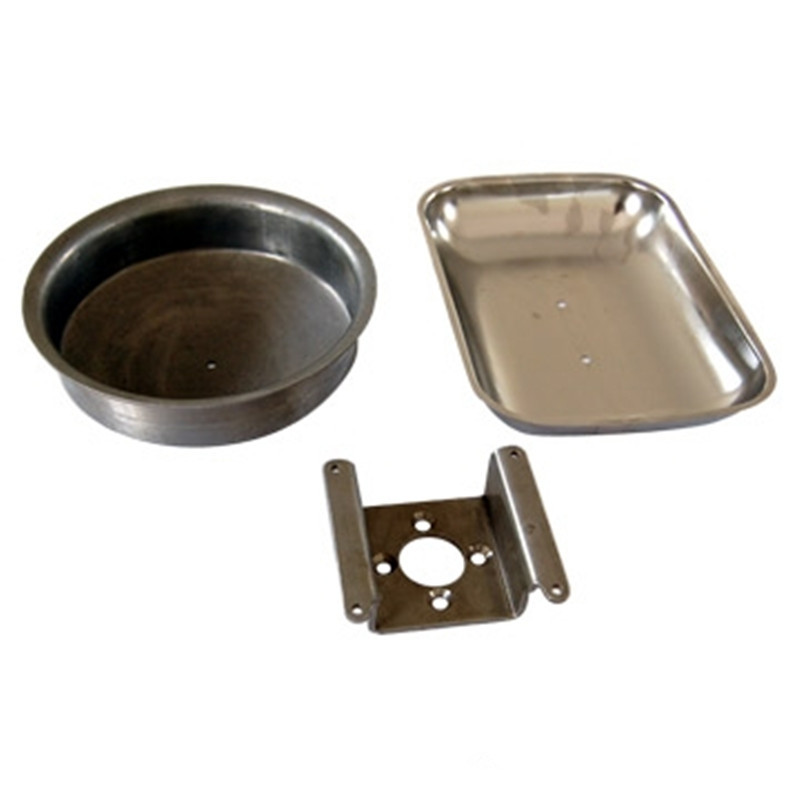
So, what exactly are custom metal stamping parts? Simply put, these are metal components shaped through a stamping process that involves pressing or punching sheet metal into desired forms using dies and presses. Unlike generic stamped parts, “custom” highlights the tailored nature — designed to fit exact specifications and requirements for particular applications or clients.
Their significance stretches beyond manufacturing; they’re integral to humanitarian efforts too. For instance, in creating durable housing or infrastructure in disaster-relief operations, stamped metal components offer fast deployment combined with resilience, an intersection of industrial know-how and social impact.
Most applications require components that can withstand stress, fatigue, and wear. Stamping allows the use of high-strength metals like stainless steel, aluminum, or copper alloys, producing parts that hold up under harsh conditions.
One of the big strengths here is producing large volumes of consistent, precise parts quickly. Through automated presses and fine-tuned dies, manufacturers meet tight tolerances—crucial for automotive or aerospace safety components.
Despite seeming complex, stamping reduces material waste and labor hours compared to machining or casting, making it a budget-friendly solution for many industries.
Modern stamping techniques accommodate complex geometries and a variety of metals, allowing innovation without sacrificing reliability.
Using recyclable metals and minimizing scrap aligns stamping processes with green manufacturing goals, increasingly valued in regulatory frameworks globally.
Mini Takeaway: Whether it’s about strength, precision, or economics, these key factors prove why custom metal stamping parts keep industries moving forward, often quietly but reliably.
The versatility of custom metal stamping parts makes them appear all over the place—in actual and figurative terms. Automotive factories in Germany churn out engine parts stamped for exact tolerances, while electronics makers in East Asia rely on printed circuit board brackets fashioned from these processes.
In humanitarian logistics, for instance, NGOs use stamped metal connectors and fasteners in rapid-deploy shelters for refugee camps or disaster zones, where setup speed and durability mean everything.
Even in remote industrial zones, stamped parts simplify equipment repairs and maintenance, lowering downtime. North American medical device firms require ultra-precise stamped parts for surgical instruments and implantable devices, underscoring the technology’s spectrum.
On a practical but also emotional level, industries that rely on these parts build trust and confidence—in their products and in their clientele. It’s not just a metal piece; it’s part of something bigger.
Frankly, the future looks pretty exciting. Automation and Industry 4.0 are transforming stamping with real-time monitoring and AI-driven quality control. Materials science breakthroughs introduce lighter, stronger alloys such as titanium blends or advanced high-strength steels.
Then, there’s sustainability — more manufacturers commit to ‘green stamping,’ using renewable energy sources and closed-loop recycling systems to minimize environmental footprints. For example, some companies pioneering these methods reported a 30% reduction in carbon emissions just within two years.
Add to this digital transformations, and you’ve got technologies like 3D printing to create complex stamps, speeding up design changes or customized one-off runs.
No process is perfect, of course. Key challenges include tooling costs, especially for complex or low-volume orders, and material limitations with certain metals prone to cracking or deformation during stamping.
Innovative approaches are tackling these. Modular dies reduce tooling expenses, while preheat processes and hybrid forming techniques improve material formability. Additionally, advanced simulation software helps engineers predict issues before fabrication – saving time and money.
| Property | Description | Typical Values |
|---|---|---|
| Material Types | Metals commonly used for stamping | Stainless steel, Aluminum, Copper, Brass, Titanium |
| Thickness Range | Sheet metal thicknesses suitable for stamping | 0.1 mm – 6 mm |
| Tolerance | Dimensional accuracy achievable | ±0.05 mm to ±0.15 mm |
| Batch Size | Typical production volume per order | From prototyping to millions of units |
| Lead Time | Time from order to delivery | 2 to 6 weeks depending on complexity |
| Vendor | Specialties | Typical Lead Times | Geographic Reach | Sustainability Initiatives |
|---|---|---|---|---|
| Ming Da Metals | Precision stamping, large-volume runs, custom metal stamping parts | 3-5 weeks | Global (Asia, Europe, Americas) | ISO 14001 certified, waste reduction |
| StampTech Solutions | Prototyping, specialty alloys, short runs | 2-4 weeks | North America and Europe | Lean manufacturing processes |
| Global Metal Works | Heavy gauge stamping, metal forming | 4-6 weeks | Worldwide | Renewable energy use in plants |
Understanding custom metal stamping parts reveals how a relatively understated process underpins huge sectors and global logistics. Their long-term value lies not only in technical specifications or cost savings but also in sustainability and real-world impact — from powering cars to supporting disaster relief infrastructure. If you want to explore or procure these parts, I’d suggest visiting our website for trusted industry expertise and tailored solutions.
It’s fascinating how something metal and small can be so central to big innovations and everyday safety.