Phone:
+86 18631189888

Email:
liyanhui@bestcastings.cn

When it comes to thermal management in various industrial applications, aluminum die casting radiators are a crucial component. Their efficiency in dissipating heat, coupled with the benefits of die casting, makes them a popular choice across diverse sectors. This article will provide a detailed exploration of aluminum die casting radiators, covering their advantages, applications, design considerations, and the role of Mingda Metals in delivering high-quality solutions. Understanding these radiators is key to optimizing performance and longevity of your equipment.
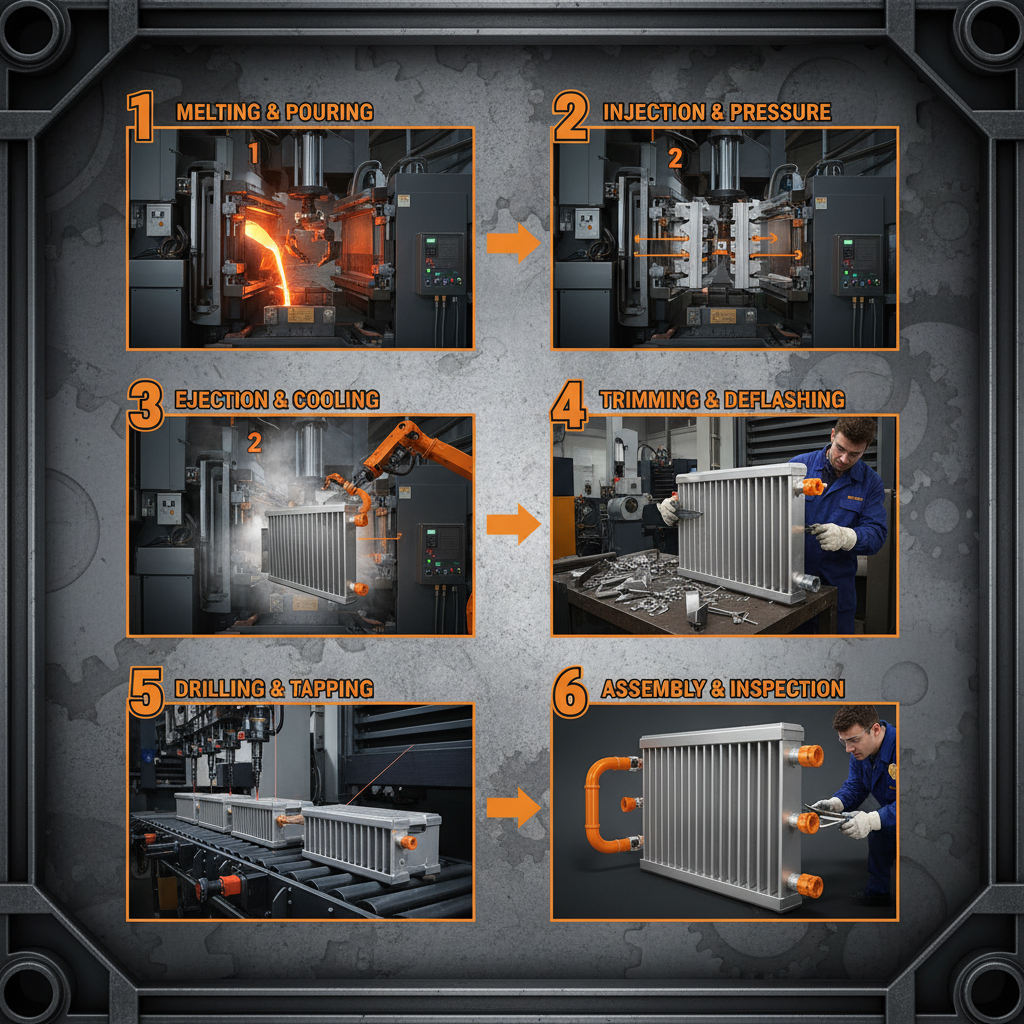
Aluminum die casting radiators are heat exchangers specifically designed to dissipate thermal energy away from electronic components, machinery, or other heat-generating sources. They are manufactured using the die casting process, where molten aluminum is injected into a mold cavity under high pressure. This results in parts with complex geometries, tight tolerances, and a smooth surface finish. The aluminum material itself boasts excellent thermal conductivity, making it ideal for efficient heat transfer. These radiators are often custom-designed to fit specific application requirements, offering a versatile solution for thermal management. Utilizing Mingda Metals’ expertise ensures optimal designs for performance.
Key Benefits: Excellent thermal conductivity, complex geometries achievable, high strength-to-weight ratio, cost-effective for high-volume production.
Choosing aluminum die casting for radiator production offers several key advantages. Aluminum’s high thermal conductivity allows for rapid heat dissipation, crucial for preventing overheating and ensuring reliable operation. The die casting process enables the creation of intricate fin designs, maximizing surface area for enhanced heat transfer. Furthermore, aluminum is lightweight, contributing to reduced overall system weight. Compared to other materials, die casting also allows for greater design flexibility and is particularly cost-effective for large production runs. Mingda Metals leverages these advantages to deliver tailored solutions for your cooling needs.
Key Benefits of Aluminum Die Casting:
• High thermal conductivity for efficient heat dissipation
• Intricate fin designs for maximized surface area
• Lightweight material reduces system weight
• Cost-effective for high-volume production
While various cooling solutions exist, aluminum die casting radiators offer a compelling balance of performance, cost, and design flexibility. Compared to extruded heat sinks, die casting allows for more complex geometries and better control over wall thickness. Compared to stamped metal radiators, die casting provides higher precision and can achieve finer details. Although copper offers slightly better thermal conductivity, aluminum is significantly lighter and more cost-effective. The following table highlights a comparison:
Aluminum die casting radiators find applications across a wide range of industries. These include: Power Electronics: Cooling IGBTs, MOSFETs, and other power semiconductors. LED Lighting: Dissipating heat from high-power LEDs to maintain performance and lifespan. Automotive: Cooling engine components, electric motors, and electronic control units. Telecommunications: Managing heat in base stations and network equipment. Industrial Machinery: Cooling motors, generators, and control systems. Mingda Metals caters to a diverse clientele with custom-engineered solutions.
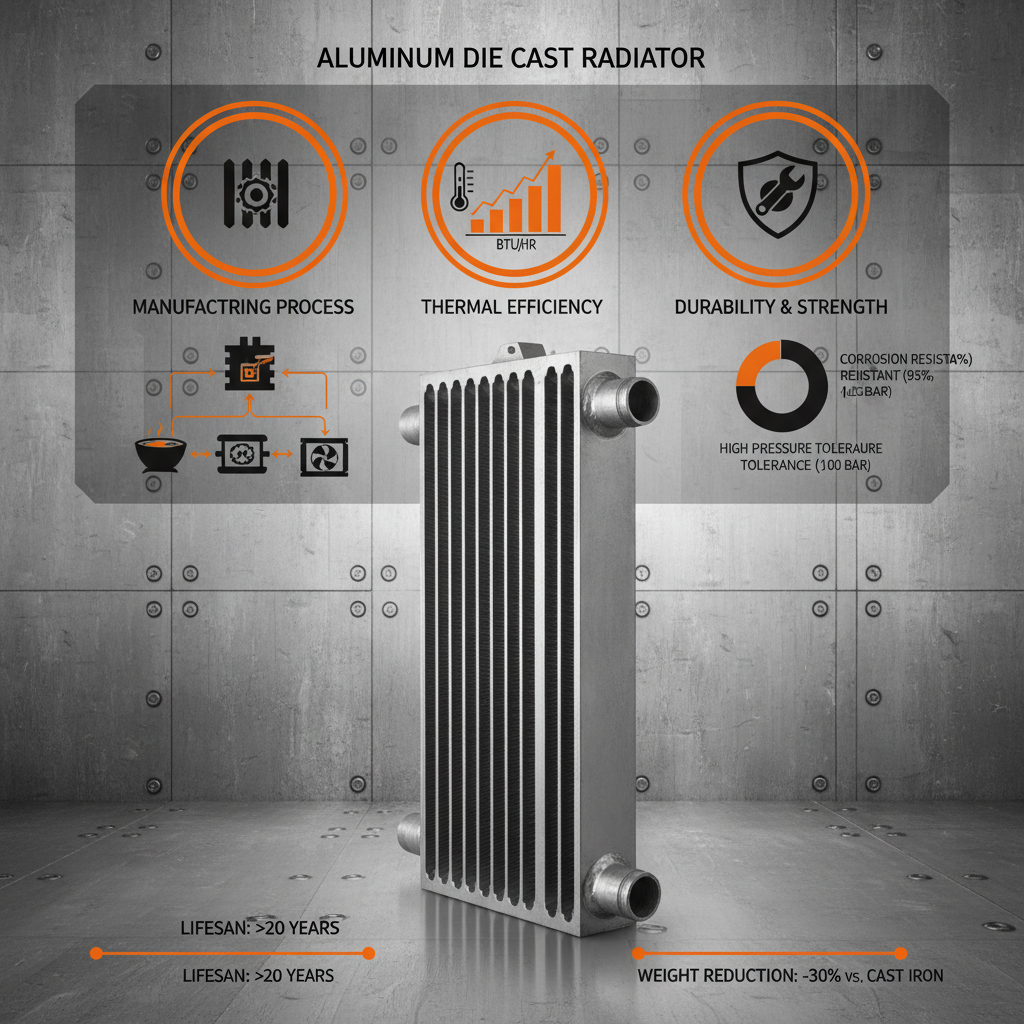
Designing an effective aluminum die casting radiator requires careful consideration of factors such as heat load, airflow, available space, and cost constraints. Key design parameters include fin density, fin height, and base thickness. Mingda Metals offers comprehensive design assistance, including thermal simulation and prototyping, to ensure optimal performance. We can customize radiator dimensions, fin geometries, and surface finishes to meet your specific application requirements. Our expertise extends from initial concept to mass production.
Aluminum die casting radiators are essential for maintaining optimal performance and reliability in a wide range of applications. Mingda Metals provides expertise in design, manufacturing, and customization, ensuring you receive a solution tailored to your specific needs. Contact us today to discuss your thermal management challenges.
The lead time varies depending on the complexity of the design, the quantity required, and our current production schedule. Typically, a custom project from initial design to finished product takes between 4-8 weeks. We prioritize clear communication throughout the process to ensure timely delivery. Factors influencing lead time include mold design and manufacturing, material sourcing, and quality control procedures. Mingda Metals is committed to efficient project management.
We offer a range of surface finishes, including powder coating, anodizing, painting, and machining. Powder coating provides excellent corrosion resistance and durability. Anodizing enhances the surface hardness and provides a decorative finish. Painting offers a wide range of color options. Machining can be used to achieve precise dimensions and surface smoothness. The choice of surface finish depends on the application requirements and desired aesthetic appeal.
Yes, Mingda Metals utilizes advanced thermal simulation software to analyze heat transfer characteristics and optimize radiator designs. This allows us to predict performance, identify potential hotspots, and refine the design for maximum efficiency. Thermal simulation helps reduce prototyping costs and accelerates the development process.