In the demanding world of hygienic fluid transport, the stainless steel elbow sanitary serves as a critical component ensuring that liquids move through piping systems without contamination or stagnation. These precision-engineered bends are essential for industries where purity is non-negotiable, providing a seamless transition that prevents the buildup of bacteria and residues.
The global shift toward more stringent health and safety regulations has placed a premium on the quality of sanitary fittings. By utilizing high-grade alloys and specialized polishing techniques, the modern stainless steel elbow sanitary meets the rigorous standards of the pharmaceutical, food and beverage, and biotech sectors, where even a microscopic imperfection can lead to catastrophic batch failures.
Understanding the nuances of these components—from surface roughness (Ra) to welding standards—is vital for engineers and procurement specialists. Choosing the right configuration not only optimizes flow dynamics and reduces pressure drops but also ensures long-term operational reliability and compliance with international sanitary certifications.
Global Context and Industrial Relevance of Sanitary Elbows
The demand for stainless steel elbow sanitary components has grown exponentially as global food supply chains and pharmaceutical production have scaled. Adhering to ISO and ASME BPE standards, these fittings are no longer viewed as simple hardware but as critical safeguards against contamination. In an era where traceability and purity are mandated by law, the precision of a sanitary bend determines the safety of the end consumer.
Industries across Europe, North America, and Asia are increasingly investing in high-grade 316L stainless steel to combat the corrosive nature of Cleaning-in-Place (CIP) chemicals. The challenge lies in balancing the cost of high-end metallurgy with the absolute necessity of a zero-defect internal surface, ensuring that no "dead legs" exist where bacteria could proliferate.
Defining the Stainless Steel Elbow Sanitary Standard
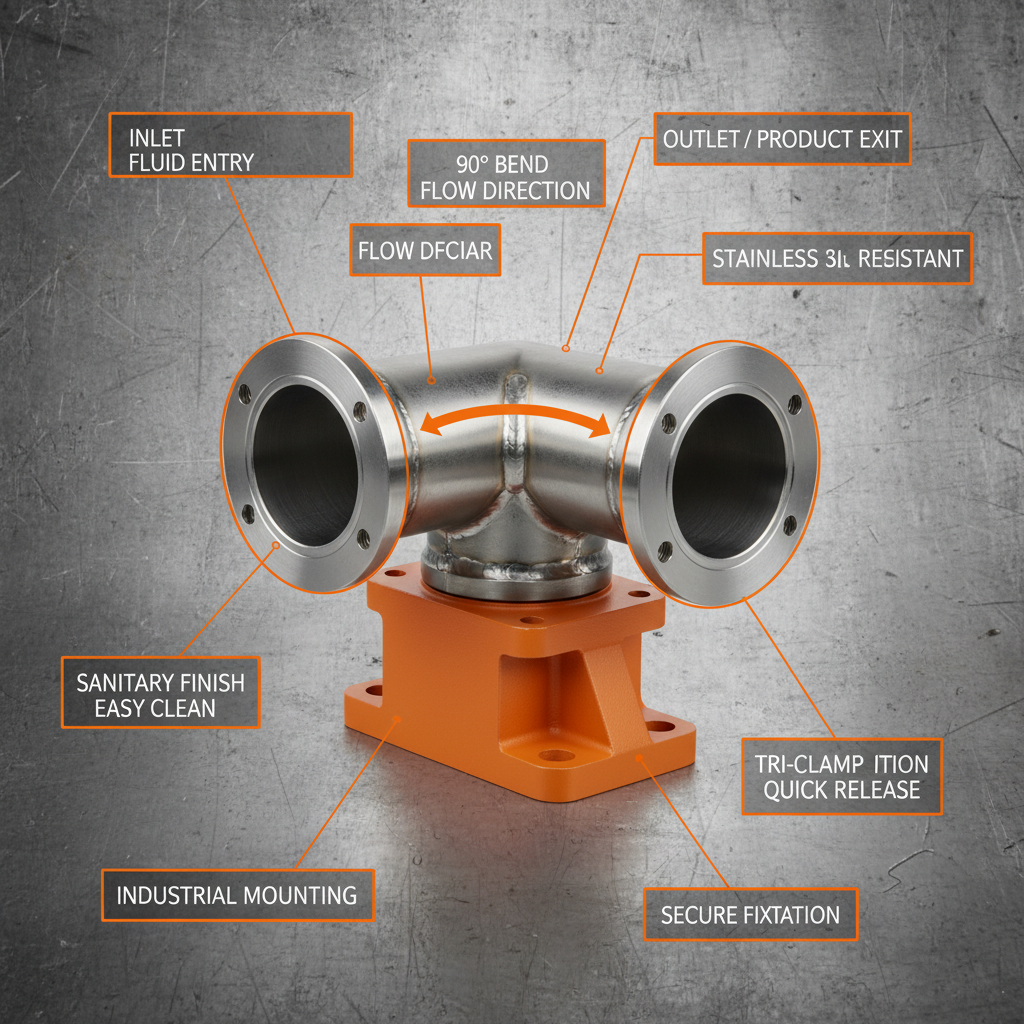
At its core, a stainless steel elbow sanitary is a curved pipe fitting designed to change the direction of fluid flow while maintaining a sterile internal environment. Unlike standard industrial elbows, sanitary versions feature an ultra-smooth interior finish, typically achieved through electropolishing or mechanical polishing, to eliminate crevices and pits.
The "sanitary" designation implies that the fitting is designed specifically for processes where the product must remain uncontaminated. This involves strict controls over the metallurgy—usually focusing on low-carbon stainless steels to prevent sensitization during welding—and the use of specialized joining methods like tri-clamp or orbital welding to ensure a seamless transition.
Beyond the physical shape, these components are integrated into a wider ecosystem of humanitarian and industrial needs. From transporting vaccines in a sterile lab to moving milk in a dairy plant, the role of the sanitary elbow is to ensure that the integrity of the medium is preserved from the point of origin to the point of delivery.
Core Components of High-Performance Sanitary Fittings
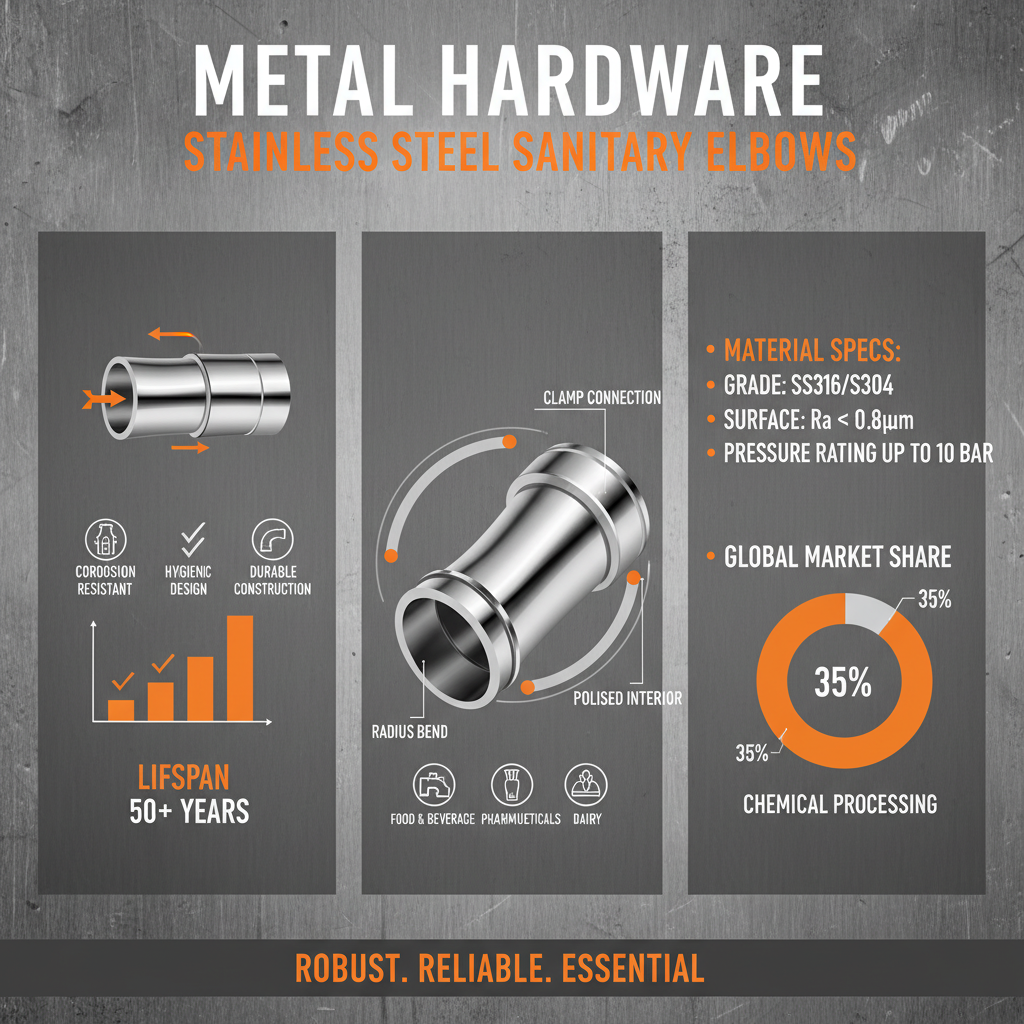
One of the primary factors defining a high-quality stainless steel elbow sanitary is its material composition. The use of AISI 316L provides superior corrosion resistance compared to 304, making it indispensable for environments exposed to saline solutions or aggressive cleaning agents used in sterile processing.
Surface roughness, measured as Ra (Roughness Average), is the second critical component. For a stainless steel elbow sanitary to be truly "sanitary," the internal surface must be polished to a mirror-like finish, typically below 0.8 μm, ensuring that no organic matter can adhere to the walls.
Lastly, geometric precision and weldability are paramount. The curvature must be mathematically precise to minimize turbulence and pressure drops, while the edges must be perfectly beveled to allow for full-penetration orbital welds, eliminating any internal gaps that could harbor microbes.
Practical Applications in Global Sterile Environments
The application of the stainless steel elbow sanitary spans across diverse sectors. In the pharmaceutical industry, these elbows are used in the production of injectable drugs, where the fluid path must be entirely devoid of particulate matter. In the food and beverage sector, they facilitate the movement of highly viscous liquids like syrups or creams without allowing product buildup.
In remote industrial zones or post-disaster relief operations, modular sanitary piping systems are often deployed to create temporary clean-water distribution networks. The reliability of these fittings ensures that water is transported safely without leaching metallic contaminants, providing essential dignity and health security to affected populations.
Performance Comparison of Stainless Steel Elbow Sanitary Variants
Long-Term Value and Sustainable Advantages
Investing in a premium stainless steel elbow sanitary provides immense long-term value by reducing the frequency of system failures and contamination events. From a logical perspective, the initial higher cost of 316L stainless steel is offset by a significantly longer lifecycle and reduced maintenance costs, as these parts resist the pitting and crevice corrosion that plague inferior metals.
From a sustainability angle, the recyclability of stainless steel makes it an eco-friendly choice for modern infrastructure. Furthermore, the efficiency of a well-designed sanitary bend reduces the energy required for pumping liquids, contributing to a lower carbon footprint for large-scale industrial plants while ensuring the highest standards of safety and trust for the end consumer.
Future Trends in Sanitary Piping Innovation
The future of the stainless steel elbow sanitary is being shaped by the digital transformation of manufacturing. Additive manufacturing, or 3D printing with metal powders, is allowing for the creation of complex, optimized internal geometries that further reduce turbulence and eliminate dead zones, pushing the boundaries of what is possible in sterile fluid dynamics.
Additionally, the integration of "smart piping" is on the horizon. We are seeing the development of sanitary fittings embedded with sensors that can monitor flow rates, temperature, and even detect the onset of biofilm formation in real-time. This shift toward predictive maintenance will allow operators to clean systems exactly when needed, rather than on a fixed schedule, saving water and chemicals.
Sustainability policies are also driving the adoption of green energy in the production of these components. From low-emission smelting to the use of recycled scrap steel, the lifecycle of the stainless steel elbow sanitary is becoming cleaner, aligning industrial growth with global environmental goals.
Overcoming Implementation Challenges in Metal Fabrication
Despite the advantages, implementing a stainless steel elbow sanitary system comes with challenges, primarily regarding installation precision. Improper welding can create "sugar" (oxidation) on the inside of the weld, which ruins the sanitary properties of the fitting and creates a breeding ground for bacteria.
To solve this, industry experts recommend the use of automated orbital welding machines and rigorous borescope inspections. By documenting every weld and verifying the internal finish, companies can ensure that the theoretical benefits of the sanitary elbow are actually realized in the physical installation.
Another common limitation is the balance between cost and specification. Not every process requires a mirror-finish 316L elbow. Providing an expert analysis of the fluid's chemistry and the cleaning protocol allows for a "fit-for-purpose" selection, ensuring that the project remains cost-effective without compromising the essential safety of the stainless steel elbow sanitary system.
Analysis of Stainless Steel Elbow Sanitary Selection Criteria
|
Application Level
|
Recommended Material
|
Surface Finish (Ra)
|
Corrosion Risk
|
|
Ultra-Pure Pharma
|
316L (Electro-polished)
|
< 0.4 μm
|
Very Low
|
|
Dairy/Beverage
|
304/316L (Mechanical)
|
0.5 - 0.8 μm
|
Low to Moderate
|
|
Cosmetics
|
316L (Polished)
|
0.6 μm
|
Moderate
|
|
Wastewater Treat.
|
304 Stainless Steel
|
1.0 - 1.6 μm
|
High
|
|
Biotech Lab
|
316L (Electro-polished)
|
< 0.4 μm
|
Very Low
|
|
Food Processing
|
304L Stainless Steel
|
0.8 μm
|
Moderate
|
FAQS
The primary difference lies in the internal surface finish and the material grade. A stainless steel elbow sanitary is engineered with a much smoother internal bore (lower Ra value) to prevent bacterial growth and residue accumulation. It also typically uses low-carbon alloys like 316L to prevent corrosion during welding, whereas standard elbows may have rougher interiors and are not designed for sterile environments.
The choice depends on the corrosive nature of your fluid and cleaning agents. 304 is suitable for general food applications with mild acidity. However, 316L is strongly recommended for pharmaceutical, biotech, and chemical applications because the addition of molybdenum provides significantly better resistance to chlorides and aggressive CIP (Cleaning-in-Place) chemicals.
Not necessarily, but it is highly beneficial for high-risk applications. While mechanical polishing can reach an Ra of 0.8 μm, electropolishing removes the "peaks and valleys" at a microscopic level and enhances the chromium-oxide protective layer. For ultra-pure water or injectable drug systems, electropolishing is the industry standard to ensure zero contamination.
Inspection frequency depends on the medium being transported. For highly abrasive fluids, quarterly borescope inspections are recommended. For standard food-grade liquids, annual checks are usually sufficient. Look for signs of pitting, discoloration (which indicates oxidation), or biofilm buildup that could compromise the sterile path.
Yes, provided they are rated for the specific pressure and temperature of your system. Many stainless steel elbow sanitary components are designed for SIP (Sterilization-in-Place) cycles involving high-pressure steam. Always verify the wall thickness (Schedule) and the pressure rating of the fitting to ensure it can handle the thermal expansion and pressure spikes.
A dead leg is a section of piping where fluid can stagnate, allowing bacteria to grow. High-quality sanitary elbows are designed with a consistent radius and precise dimensions that promote laminar flow. When installed correctly with orbital welding, they ensure there are no gaps or "pockets" where the fluid can stop moving, thereby maintaining the integrity of the entire system.
Conclusion
The stainless steel elbow sanitary is far more than a simple plumbing component; it is a cornerstone of modern hygienic engineering. By integrating superior metallurgy, precision surface finishing, and strict adherence to global standards, these fittings enable the safe production of the world's most critical food and medicine. The transition from standard industrial parts to high-performance sanitary solutions is a necessary step for any facility prioritizing consumer safety and operational efficiency.
Looking forward, the adoption of smart monitoring and additive manufacturing will continue to refine the efficiency of sterile fluid transport. We encourage engineers and facility managers to prioritize the long-term value of 316L materials and electro-polished finishes to future-proof their infrastructure against evolving health regulations. For high-quality, certified sanitary solutions, visit our website: www.mingdametals.com