Phone:
+86 18631189888

Email:
liyanhui@bestcastings.cn

Understanding the cost of stamped parts is crucial for successful product development and manufacturing. This article provides a detailed overview of factors influencing pricing, a general stamped part pricelist guide, and how Mingda Metals can deliver cost-effective solutions. We'll cover material selection, complexity, volume, and tooling costs to help you budget effectively. Accurate cost estimation is essential for maximizing profitability in today’s competitive market.
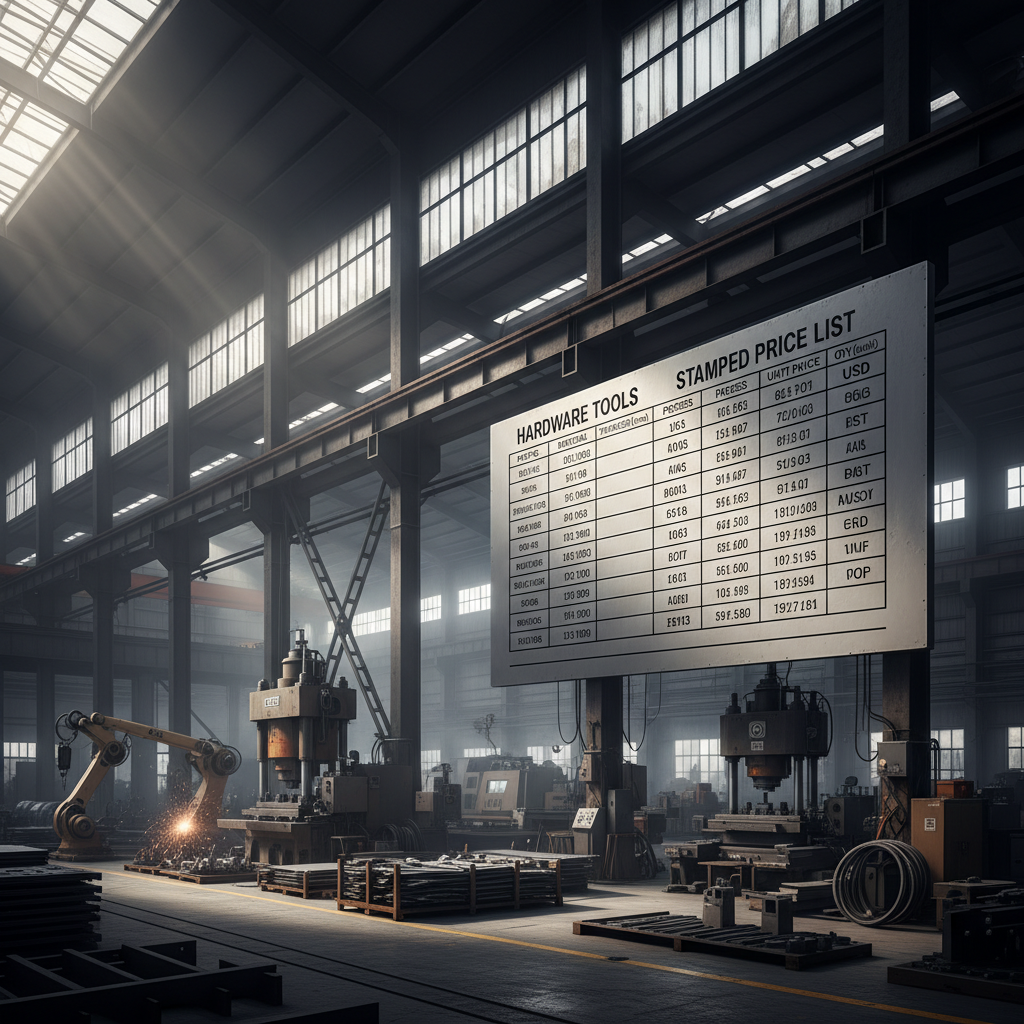
Several key elements determine the final cost of a stamped part. First, material selection plays a significant role. Stainless steel, aluminum, and carbon steel have vastly different price points. Secondly, the part's complexity impacts tooling and production time. Intricate designs with tight tolerances require more sophisticated tooling and skilled operators. Thirdly, production volume is a major cost driver. Larger orders benefit from economies of scale, reducing the per-part cost. Finally, tooling costs, including design, fabrication, and maintenance, contribute significantly, especially for low-volume runs. Understanding these factors is the first step toward effective cost management.
Key Takeaways: Material, complexity, volume, and tooling all contribute to the overall cost of stamped parts. Careful consideration of these factors during the design phase can lead to significant cost savings.
Providing a precise stamped part pricelist without specific details is challenging. However, here's a general range to give you a rough estimate. These figures are based on carbon steel, moderate complexity, and exclude tooling costs. Contacting Mingda Metals for a custom quote is always recommended for accurate pricing.
Tooling costs can represent a substantial portion of the initial investment, especially for complex parts or low production volumes. These costs include the design and fabrication of the die or stamping tool. Simple tools may cost a few hundred dollars, while complex, progressive dies can easily exceed several thousand. Mingda Metals provides transparent tooling cost estimates and can explore options like shared tooling to reduce expenses. Amortizing tooling costs over the production run helps to understand the true per-part price.
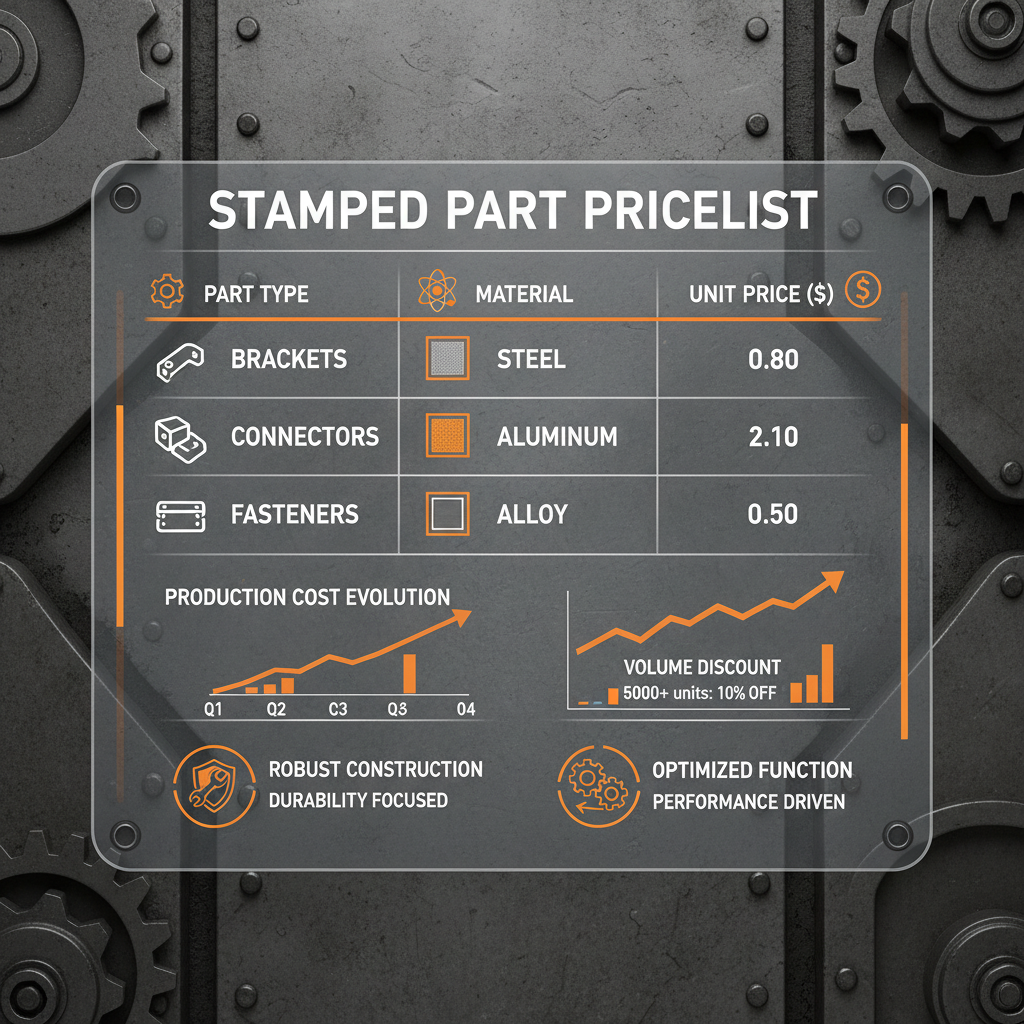
Material cost is a direct component of the overall price. Here's a comparison of some common materials used in stamping:
At Mingda Metals, we specialize in delivering high-quality stamped parts at competitive prices. We offer a comprehensive range of services, from design assistance and tooling fabrication to high-volume production. Contact us today to discuss your specific requirements and receive a customized quote. We are committed to providing reliable, cost-effective solutions to meet your manufacturing needs.
To provide an accurate quote, we require a detailed drawing (preferably in CAD format) of the part, specifying material, dimensions, tolerances, and any specific finishing requirements. Please also indicate the anticipated annual volume. The more information you provide, the more precise our quote will be. If you only have a concept or sketch, our engineering team can assist with design for manufacturability (DFM) to optimize the part for cost-effective production.
Tooling lead time varies depending on the complexity of the tool. Simple tools can be completed in 2-4 weeks, while complex progressive dies may require 6-12 weeks or more. We prioritize clear communication throughout the tooling process, providing regular updates on progress. We also offer tooling management services to streamline the process and minimize delays.
Yes, we do! Our experienced engineering team can provide valuable design assistance, including DFM analysis, material selection guidance, and optimization for cost-effective manufacturing. We can help identify potential issues early in the design process, reducing the risk of costly rework and ensuring a smooth production run.
Mingda Metals offers a combination of competitive pricing, high-quality parts, fast turnaround times, and exceptional customer service. We are committed to building long-term relationships with our clients, providing reliable and innovative solutions to meet their evolving manufacturing needs. We also offer value-added services such as finishing, assembly, and packaging.