Phone:
+86 18631189888

Email:
liyanhui@bestcastings.cn


At first glance, common nails might seem like the most straightforward hardware you can get your hands on, but there’s a surprising depth to what a common nails manufacturer really does. These tiny fasteners literally hold the world together — from housing construction to large-scale industrial applications. Globally, the construction industry alone is projected to grow at a rate exceeding 5% annually, according to the World Bank, making the role of these manufacturers critical. Knowing the ins and outs of this niche helps industries ensure durability, reliability, and cost-effectiveness in infrastructure development.
We live in a world that demands quick, reliable, and scalable building solutions. Whether it's a sprawling urban development or emergency shelters in remote disaster-hit zones, common nails are ubiquitous. According to ISO standards on fasteners (ISO 898-1), engineering quality and consistency are key—yet many manufacturers still struggle with balancing production cost and durability. Oddly enough, despite such demand, there’s a surprising gap in the global supply chain for high-quality common nails that meet international standards. This challenges builders and suppliers everywhere.
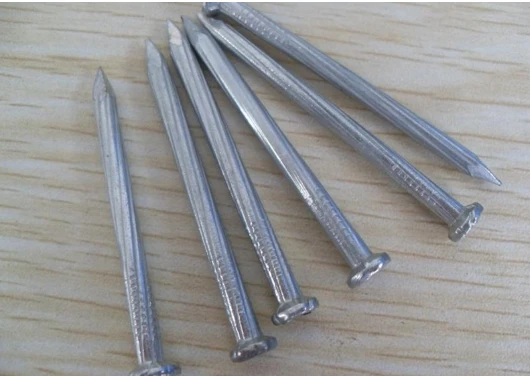
Simply put: a common nails manufacturer is a company specializing in producing general-purpose nails used primarily in wood framing and everyday construction. These nails are thicker and stronger than finishing nails, designed for strength rather than subtlety. While they seem like simple products, their manufacturing involves precise metallurgy, quality testing, and automated assembly lines to meet growing demand with consistent quality. The connection to broader industry needs is visible, especially in humanitarian efforts where fast, sturdy construction can mean the difference between survival and hardship.
Durability is king here. These nails must withstand environmental stress, from moisture to extreme temperatures. Manufacturers often use galvanized steel or premium alloys to improve rust resistance.
Mass production capabilities are vital. A reputable common nails manufacturer can churn out millions per day, adapting quickly to large orders without compromising quality.
Steel prices fluctuate, so manufacturers must optimize raw material use and streamline production. Economies of scale help keep prices low, making construction projects more affordable.
Quality checks are not just box-ticking. Automated sorting, tensile testing, and microscopic surface inspections ensure nails meet ISO and ASTM standards, minimizing failure risks in real structures.
Some projects demand unique nail sizes or coatings, especially in specialty construction or export markets. Flexible manufacturers can tweak specifications while maintaining lead times.
| Specification | Details |
|---|---|
| Material | Carbon Steel, Galvanized |
| Lengths | 1" to 4" |
| Diameter | 2d to 16d (approx. 1.6mm to 4.0mm) |
| Coating | Electro-Galvanized, Hot-Dip Galvanized |
| Head Type | Flat, Large Head for Holding Power |
| Tensile Strength | 40,000 psi (approx.) |
It’s not just your local carpenter who relies on common nails. In post-disaster relief operations from Southeast Asia to the Caribbean, rapid deployment shelters lean heavily on nails made by expert manufacturers. In remote industrial zones of Africa or South America, a secure nail means safer structures that withstand heavy weather. Even large infrastructure projects in Europe specify nails that have passed stringent quality checks to ensure worker and public safety. The common nails manufacturer ecosystem connects end-users globally, meeting diverse specifications with remarkable efficiency.
| Vendor | Quality Standards | Production Capacity | Customization | Sustainability Practices |
|---|---|---|---|---|
| Ming Da Metals | ISO & ASTM Certified | 10+ million nails/day | Custom sizes/coatings | Eco-friendly packaging & recycling |
| Global Nails Inc. | ISO Certified | 7 million nails/day | Limited | Standard environmental compliance |
| SteelHold Nails | ASTM Certified | 5 million nails/day | Specialty coatings only | Minimal eco initiatives |
Sure, nails are small, but they offer big value. Cost-wise, consistently high-quality nails reduce project delays and rework, saving time and money. On the sustainability front, some manufacturers now use recycled steel and eco-conscious packaging, reflecting growing industry trends toward greener building practices. Emotionally, a reliable nail means safety—a particularly heavy feeling in disaster shelters or schools. I’ve worked with engineers who insist that these small details inspire huge trust in the underlying structure, the kind that lasts decades, standing firm through storms and wear.
Technology is creeping into even this traditional industry. Think digitized quality inspections using AI-driven vision systems, or new materials like bioplastics for environmentally sensitive applications. Automation and robotics will further boost production speed, while enhanced coatings could improve corrosion resistance drastically. Policies favoring green manufacturing processes are also shaping the future. It seems manufacturers who embrace technology and sustainability will lead the pack, setting standards uncommon just a decade ago.
Not everything is perfect in nail manufacturing. Supply chain disruptions, such as fluctuating steel prices or shipping delays, pose real headaches. Sometimes, quality standards slide under pressure to meet demand. Yet, manufacturers invested in vertical integration and local sourcing show resilience. Many also collaborate closely with construction firms, tweaking designs and delivery strategies to avoid costly project downtime. There’s a sense in the industry that partnership and transparency are as vital as raw materials.
So, next time you see a simple box of common nails, remember the complex web of expertise and global effort behind them. For builders, designers, and humanitarian workers alike, these pins of steel provide a foundation of trust and permanence. For quality and reliability, a responsible common nails manufacturer is your go-to partner. You really can’t underestimate their value in shaping the infrastructure of tomorrow.
Mini takeaway: In real terms, the strength and quality of something as ordinary as a nail can pave the way for extraordinary structures—physically and socially.