Phone:
+86 18631189888

Email:
liyanhui@bestcastings.cn


Understanding iron castings pricelist is crucial for businesses sourcing components for diverse applications. At Mingda Metals, we specialize in providing high-quality iron castings at competitive prices. This article will outline the factors influencing pricing, typical cost ranges, and how Mingda Metals ensures value for our clients. We will cover various types of iron castings, including gray iron, ductile iron, and white iron, and how their properties affect costs. Accurate price knowledge empowers informed decision-making in your sourcing strategy.
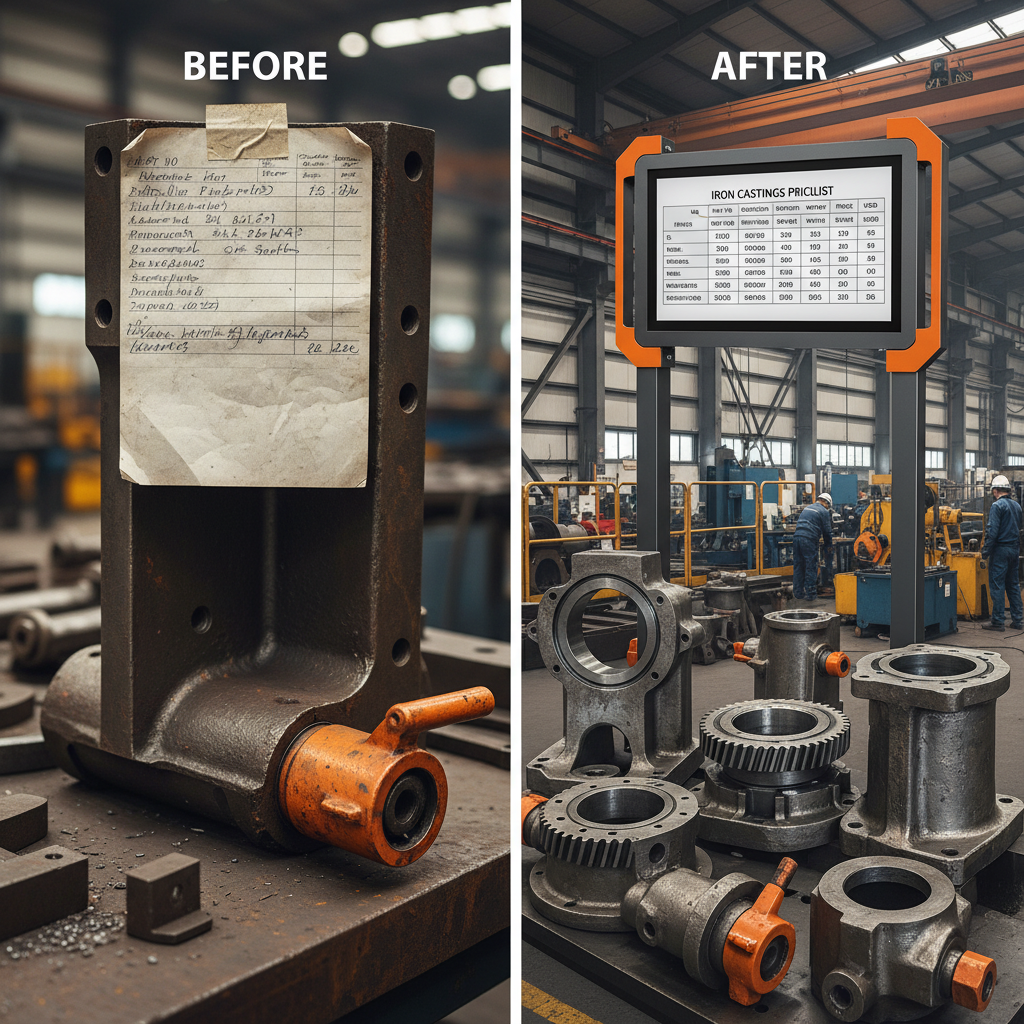
Several key factors determine the iron castings pricelist. The complexity of the casting is a major driver – intricate designs with numerous cores and features increase tooling costs and machining time, leading to higher prices. Material composition also plays a significant role. Ductile iron, known for its strength and ductility, is typically more expensive than gray iron. Order quantity is another critical element; larger orders benefit from economies of scale, reducing per-unit costs. Furthermore, machining requirements, inspection standards, and the specific foundry’s capabilities all contribute to the overall price. Finally, fluctuating raw material costs (iron, alloys, etc.) directly impact casting prices.
Key Considerations: Complexity of design, material grade, order volume, machining requirements, and raw material costs significantly influence iron casting prices.
The iron castings pricelist can vary substantially depending on the factors mentioned above. Here’s a general overview of price ranges per piece, assuming moderate complexity and typical machining requirements:
At Mingda Metals, we are committed to providing transparent and competitive iron castings pricelist. We achieve this through efficient production processes, strategic sourcing of raw materials, and a strong focus on quality control. Our experienced team works closely with clients to understand their specific needs and offer tailored solutions. We offer services like design for manufacturability to help optimize castings for cost-effectiveness without compromising quality. We pride ourselves on delivering consistent quality and on-time delivery, building long-term partnerships with our customers.
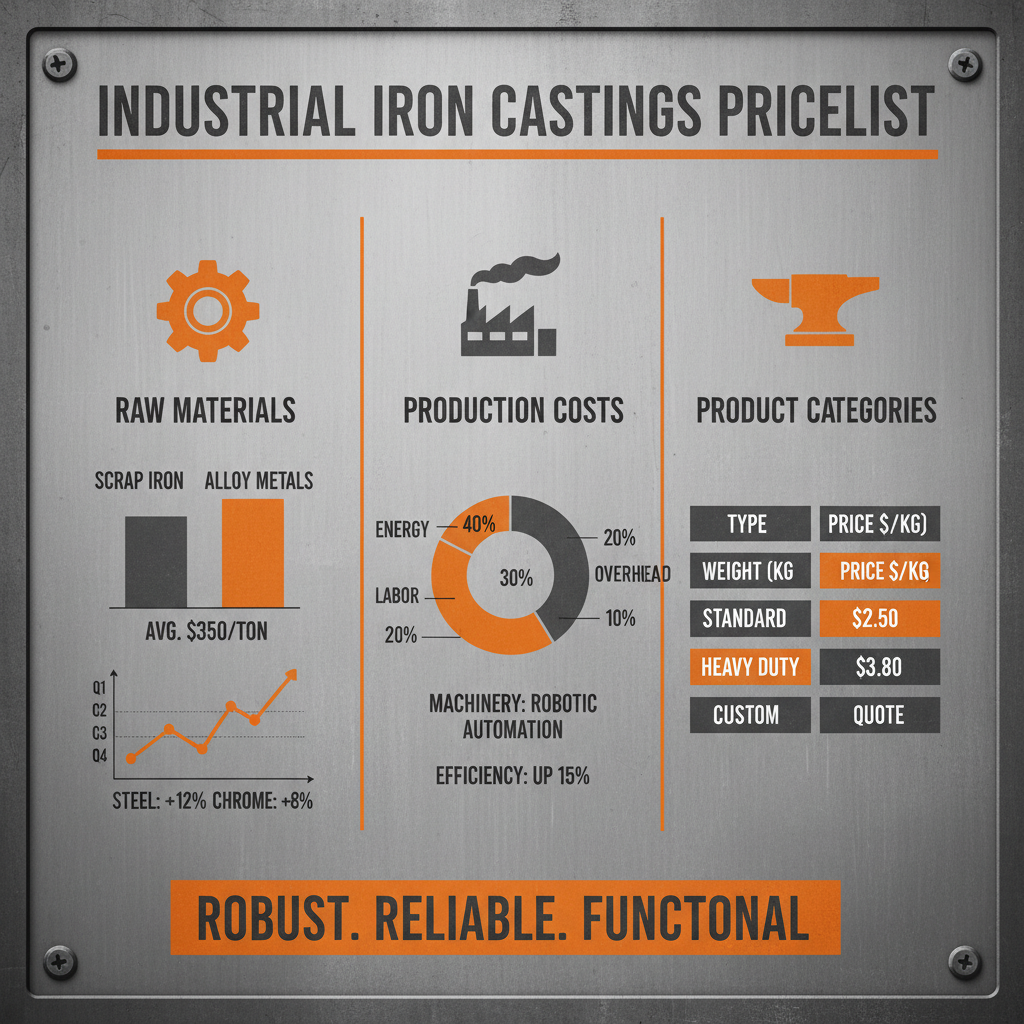
Different iron casting types offer varying properties and, consequently, different price points. Gray iron is the most common and affordable option due to its ease of casting and good machinability. Ductile iron, offering superior strength and impact resistance, commands a higher price. White iron, known for its extreme hardness and wear resistance, is the most expensive due to its complex casting process and limited applications. Choosing the right iron type based on your application is crucial for optimizing both performance and cost.
Choosing the right partner for your iron casting needs is vital for success. Mingda Metals offers a combination of competitive iron castings pricelist, superior quality, and dedicated customer service. Contact us today to discuss your project and receive a customized quote.
Lead times vary depending on the complexity of the casting, order quantity, and our current production schedule. Generally, for standard castings with readily available tooling, lead times range from 4-8 weeks. For new tooling or complex designs, lead times can extend to 8-12 weeks. We provide a detailed production schedule with each quote to ensure transparency and manage expectations. We also offer expedited services for urgent orders, subject to capacity and feasibility.
Yes, Mingda Metals offers comprehensive design assistance to optimize castings for manufacturability and cost-effectiveness. Our experienced engineers can review your designs, suggest improvements, and ensure they meet the requirements of the casting process. We utilize advanced CAD/CAM software and simulation tools to identify potential issues early in the design phase, reducing the risk of costly errors. We can assist with material selection, geometric optimization, and tooling design.
At Mingda Metals, we adhere to stringent quality control standards throughout the entire production process. This includes raw material inspection, in-process checks, and final product inspection. We utilize advanced inspection equipment, such as coordinate measuring machines (CMMs), and non-destructive testing methods to ensure castings meet dimensional accuracy, material specifications, and structural integrity. We are committed to continuous improvement and maintain a robust quality management system.
We typically require a 30% deposit upon order confirmation, with the remaining 70% due before shipment. We accept various payment methods, including T/T (Telegraphic Transfer), and Letter of Credit (L/C). We are flexible and can discuss customized payment terms based on the specific order and client relationship. We prioritize clear and transparent financial transactions to build trust and foster long-term partnerships.